Last time we introduced Hebrew verbs and read the beginning of Genesis 1. I’d like to keep reading in Genesis, in chapters 1 and 2, while introducing some more vocabulary and grammar. Additionally I’d like to introduce Hebrew verb stems.
Let’s talk about the verb stems first. When you look up a Hebrew verb in a dictionary you’ll often see subentries talking about the “Qal”, “Piel”, and “Hiphil”, and so forth of that verb. These are different verb stems. A Hebrew verb stem or verbal pattern is called a binyan (בִּנְיָן). The plural is binyanim (בִּנְיָנִים). This is a feature common to Semitic languages in which a verb root can appear in several recurring patterns. For example the three-letter root mem-lamed-kaph can take the form מֶלֶךְ, which means “king”, or the verb מָלַךְ, which means “he reigned”, or the form הִמְלִיךְ, which means “he caused to reign”. The root shin-bet-resh can take the form שָׁבַר, which means “he broke” or the form שִׁבַּר, which means “he shattered”. These different patterns are called the binyanim.
I mentioned that the plural of binyan is binyanim. Hebrew nouns are typically made plural in two ways. For masculine nouns you add the suffix -im. For feminine nouns you add the suffix -ot. For example, the plural of the masculine word for horse, סוּס, is סוּסִים. And the plural of the feminine word of law, תּוֹרָה, is תּוֺרוֺת.
Going back to the binyanim, we’ll introduce 7 binyanim. There are a few additional rare patterns, but these seven account for the overwhelming majority of Biblical Hebrew verbs. These are:
Qal
Niphal
Piel
Pu’al
Hiphil
Hophal
Hitpa’el
Not every Hebrew root occurs in every binyan. Some roots appear in only one or two binyanim, while others occur in several. And the functions described below are general tendencies rather than rigid rules. Each binyan has a characteristic range of functions. They are distinguished by changes to the verbal root such as prefixes or vowel patterns. In what follows I’ll use the perfect (suffix conjugation) because its patterns are easier to recognize. The binyanim also occur in the imperfect form, but the patterns are more complicated there, so we’ll focus on the perfect.
The Qal is the basic binyan. When you look up a verb in the dictionary the Qal form is listed first. You can think of the Qal form as the basic form on which other binyanim build. Incidentally the word בִּנְיָן actually means “building”. The Qal is normally an active stem, although some Qal verbs have stative meanings (such as “to be old,” “to be great,” etc). The Qal is also sometimes called the Pa’al. I’ll give some examples of Qal verbs using the third-person, masculine, singular. Notice the verb patterns in these two syllable words. In the Qal they usually have a two “-ah” vowels in a row. Usually a qammatz and a pataḥ.
Some examples of the Qal are:
שָׁמַע – heard
שָׁבַר – broke
מָלַךְ – reigned (ruled)
חָבָה – hid
פָרָה – was fruitful
רָבָה – multiplied
נָפַל – fell
לָקַח – took
דָּבַק – clung
מָטַר – rained (precipitation)
זָכַר – remembered
קָדַשׁ – sanctified
חָזַק – was strong
בָּדל – separated
כָּתַב – wrote
קוּם – arise, established
צָוָה – commanded
Now let’s look at the other binyanim and see how they are different.
The Niphal binyan often has a passive or reflexive meaning, although it can also describe entering into some state (“becoming”) or reciprocal actions. In the perfect it is formed by adding a nun prefix, along with a hireq vowel, making a “ni-” prefix. So for example, the Qal form שָׁמַע means “he heard”. The Niphal form נִשְׁמַע means “was heard”. The Qal כָּתַב means “wrote” and the Niphal נִכְתַּב means “was written”. Here are a few other examples of the Niphal in the perfect, third-person masculine singular. Look for the patterns.
נִשְׁמַע – was heard
נִכְתַּב – was written
נִשְׁבַּר – was broken
נִלְקַח – was taken
נִבְדַּל – was separated
The Piel binyan is an interesting one. It is traditionally described as “intensive,” although modern scholars recognize that its function varies considerably from verb to verb. You can see this in the example of the difference between the Qal form שָׁבַר meaning “he broke” and the Piel form שִׁבַּר meaning “he shattered”. The Piel binyan usually has a dagesh in the second root consonant, unless that consonant happens to be one that can’t take a dagesh. It also has different vowel patterns. Notice how the Qal שָׁבַר doesn’t have a dagesh in the bet while the Piel שִׁבַּר does. It’s worth mentioning that sometimes the Piel form is the most common form for some words. One very common example is the word דִּבֶּר, which means “to speak”. It is almost always in the Piel form in the Bible. Here are some examples of the Piel in the perfect, third-person masculine singular. Look for the patterns in the vowels:
שִׁבַּר – he shattered
דִּבֶּר – he spoke
בִּקֵּשׁ – he searched
מִהַר – he hurried
צִוָּה – he commanded
חִלֵּל – he defiled
כִּתֵּב – he inscribed
Notice that the first syllable has a ḥireq, “ee”, sound.
The Pu’al binyan is like the Piel but is passive. Like the Piel, the Pu’al has a dagesh in the second consonant. The Pu’al usually begins with an “u” vowel. This “oo” sound being associated with something passive is worth remembering as a useful mneumonic for when we look at participles eventually. So if the Piel שִׁבַּר means “he shattered” the Pu’al שֻׁבַּר means “he (it) was shattered”. If צָוָה means “commanded” צֻוָּה means “was commanded”. Here are some examples of Pu’al verbs:
שֻׁבַּר – was shattered
צֻוָּה – was commanded
לֻקַּח – was taken
כֻּתַּב – was inscribed
The Hiphil binyan has a causative function. It is formed by adding a he prefix with a hireq vowel, a “hi-” prefix. To use an example from earlier, the Qal מָלַךְ means “he reigned” and the Hiphil הִמְלִיךְ means “he caused to reign”. As we saw in the Piel there are some verbs for which the Hiphil is the most basic form. One example is בָּדל, “he separated”, which we see in its Hiphil form, הִבְדִּיל. Here are some examples of Hiphil verbs:
הִמְלִיךְ – caused to reign (rule)
הִזְכִּיר – caused to remember
הִמְטִיר – caused to rain (precipitation)
הִבְדִּיל – divided
הִכְתִּיב – dictated
הֵקִים – raised up
The Hophal binyan is like the Hiphil but is passive. Like the Hiphil, the Hophal has a hey prefix. Instead of the Hiphil’s hi- prefix, the Hophal usually begins with a hu- prefix (הֻ־), or ho- prefix (הָ־). As an example, if כָּתַב means “wrote”, הִכְתִּיב means “dictated”, הוּכְתַּב means “was dictated to”. If קוּם, means “established”, הֵקִים means “raised up”, הוּקַם means “was raised up”. The Qal מָלַךְ means “he reigned”, the Hiphil הִמְלִיךְ means “he caused to reign”, and the Hophal הָמְלַךְ means “he was caused to reign” or “he was made king”.
הוּכְתַּב – was dictated to
הוּקַם – was raised up
הָמְלַךְ – was made king
The Hitpa’el binyan is usually reflexive or reciprocal in function. It is formed by adding a two-letter prefix, hey and tav, with a hireq “ee” vowel: a “hit-” prefix. For example, the Qal כָּתַב means “wrote”, and the Hitpa’el הִתְכַּתֵּב means “wrote to each other”. Another example is קָדַשׁ, “sanctified” and הִתְקַדֵּשׁ, “sanctified himself”. Here are some more examples of Hitpa’el verbs:
הִתְחַבֵּא – hid himself
הִתְקַדֵּשׁ – sanctified himself
הִתְחַזֵּק – strengthened himself
הִתְכַּתֵּב – wrote to each other
Let’s go over those binyanim again, with a brief descriptor for each:
Qal – basic (active)
Niphal – passive, reflexive
Piel – intensive
Pu’al – passive intensive
Hiphil – causative
Hophal – passive causative
Hitpa’el – reflexive, reciprocal
Before moving on to the text itself, let’s introduce some vocabulary that we will see.
אָדָם – adam – Human, mankind
אִישׁ – ish – Man
אִשָּׁה – ishah – Woman
זָכָר – zachar – Male
נְקֵבָה – neqebah – Female
רָקִיעַ – raqia – Expanse
עָשָׂה – asah – To do, make
צֶלֶם – tzelem – Image
דְּמוּת – demut – Likeness
בָרַךְ – barak – To bless
פָרָה – parah – To be fruitful
רָבָה – rabah – To multiply
מָלֵא – male – To fill
יָצַר – yatsar – To form, fashion
עָפַר – aphar – Dust
אֲדָמָה – adamah – Ground
נֶפֶשׁ – nephesh – Soul
לְבַד – lebad – Alone
עֵזֶר – ezer – Help
נֶגֶד – neged – In front of
נָפַל – nafal – To fall
לָקַח – laqach -To take
עֶצֶם – etzem – Bone, selfsame
בָּשָׂר – basar – Flesh
עָזַב – azav – Leave
אָב – av – Father
אֵם – em – Mother
דָּבַק – dabaq – To Cling
עָרוֹם – arum – Naked
בּוֺשׁ – bosh – To be ashamed
Now let’s get into the text. Last time we read the first 5 verses of Genesis 1. This time we’ll skip around over a few select verses instead of reading all of them. I’m picking verses that have interesting vocabulary, have examples of the different binyanim, and have important themes for the story. We’ll start with Genesis 1:14.
Genesis 1:14
וַיֹּ֣אמֶר אֱלֹהִ֗ים יְהִ֤י מְאֹרֹת֙ בִּרְקִ֣יעַ הַשָּׁמַ֔יִם לְהַבְדִּ֕יל בֵּ֥ין הַיּ֖וֹם וּבֵ֣ין הַלָּ֑יְלָה וְהָי֤וּ לְאֹתֹת֙ וּלְמ֣וֹעֲדִ֔ים וּלְיָמִ֖ים וְשָׁנִֽים׃
“And God said, Let there be lights in the firmament of the heaven to divide the day from the night; and let them be for signs, and for seasons, and for days, and years” (KJV)
I mentioned in the previous episode how the concept of dividing things up features in the story of creation. For example, God divided, וַיַּבְדֵּל, the light from the darkness (Genesis 1:4). The verb בָּדל is one of those verbs that occurs in a binyan other than the Qal. בָּדל most often occurs in the Hiphil form, the causative form, הִבְדִּיל, with that he prefix. In this verse it’s in the Hiphil infinitive form, לְהַבְדִּ֕יל. Here it also has a lamed prefix. Biblical Hebrew usually forms the infinitive by attaching a ל (“to”) to the infinitive construct. So לְהַבְדִּיל means “to divide.”
In this verse God is calling for there to be lights, מְאֹרֹת, in the firmament or expanse, בִּרְקִ֣יעַ. The bet prefix meaning “in” the raqia. And these lights are to divide between, בֵּין, the day, הַיּ֖וֹם, and the night, הַלָּ֑יְלָה. Remember that the ha prefix there is the definite article, “the”. So the nouns day and night by themselves are יוֹם and לָ֑יְלָה.
Genesis 1:15
וְהָי֤וּ לִמְאוֹרֹת֙ בִּרְקִ֣יעַ הַשָּׁמַ֔יִם לְהָאִ֖יר עַל־הָאָ֑רֶץ וַֽיְהִי־כֵֽן׃
“And let them be for lights in the firmament of the heaven to give light upon the earth: and it was so.”
Note here another use of the lamed prefix, “for”, where לִמְאוֹרֹת֙ means “for lights”. In the last episode I also talked about the construct form for nouns and how בְּרֵאשִׁ֖ית in Genesis 1:1 might be in the construct form. Here רָקִיעַ is in the construct form so that בִּרְקִ֣יעַ הַשָּׁמַ֔יִם together means “in the firmament of heaven”. It’s not just the firmament but the firmament of something. So it’s in the construct form. Sometimes the construct form is the same as the absolute form, which is the case here. But we can tell by context that it’s in the construct form.
This verse has another Hiphil, causative binyan: לְהָאִ֖יר. That lamed prefix is a good indication that this might be an infinitive, and it is. The verb אוֹר in the Qal means “shine” and the Hiphil הָאִ֖יר means “to give light”.
Genesis 1:26
וַיֹּ֣אמֶר אֱלֹהִ֔ים נַֽעֲשֶׂ֥ה אָדָ֛ם בְּצַלְמֵ֖נוּ כִּדְמוּתֵ֑נוּ וְיִרְדּוּ֩ בִדְגַ֨ת הַיָּ֜ם וּבְע֣וֹף הַשָּׁמַ֗יִם וּבַבְּהֵמָה֙ וּבְכׇל־הָאָ֔רֶץ וּבְכׇל־הָרֶ֖מֶשׂ הָֽרֹמֵ֥שׂ עַל־הָאָֽרֶץ׃
“And God said, Let us make man in our image, after our likeness: and let them have dominion over the fish of the sea, and over the fowl of the air, and over the cattle, and over all the earth, and over every creeping thing that creepeth upon the earth.”
Something very interesting happens in this verse. I mentioned in the last episode that although the noun אֱלֹהִ֔ים is plural in form it’s almost always accompanied by verbs in the singular, indicating that אֱלֹהִ֔ים is not a group of beings but one being. That holds here as well with וַיֹּ֣אמֶר, “and he (singular) said”. But then he speaks in the first person plural for a bit. With the verb עָשָׂה, “to do” or “to make” God uses the first person plural imperfect form, נַֽעֲשֶׂ֥ה, “let us make”. Remember that the perfect form primarily has suffixes and the imperfect form primarily has prefixes (with a few suffixes). That nun prefix is a prefix for the first person plural: “we make”. Here it serves as what’s called a cohortative because God is not just saying “we make” but “let us make”. The cohortative is a special first-person form expressing intention or resolve. God then speaks of a צֶלֶם “image” and a דְּמוּת “likeness”. But each has a nu suffix, something called a pronominal suffix. The nu suffix is a possessive first person plural. So it’s צַלְמֵ֖נוּ, “our image” and דְמוּתֵ֑נוּ, “our likeness”. These also have prefixes; a bet prefix and a kaph prefix. The bet prefix is “in” and the kaph prefix is “as”. Translatable as “in our image”, בְּצַלְמֵ֖נוּ, and “after our likeness”, כִּדְמוּתֵ֑נוּ. The question as to why plural language is used here is certainly one that generated a great deal of discussion throughout Jewish and Christian interpretation.
The word for “man”, “mankind”, or “human” here is אָדָ֛ם (adam), which should sound familiar. Adam is both a proper name as well as a word for human beings generally. Here especially it’s primarily, if not exclusively, the understanding of human beings that is meant. Though I suppose literarily the two meanings are not necessarily so separable anyway.
One other thing I like in this verse, הָרֶ֖מֶשׂ הָֽרֹמֵ֥שׂ, is a repetition of the root רמשׂ. The word רֶמֶשׂ is a noun for creeping things and רָמַשׂ is a verb for creeping. In this verse the verb רָמַשׂ is in a participle form, indicative ongoing or continuous action, as with an -ing ending in English. One common pattern for a Qal active participle is a holem, “oh” vowel, over the first root consonant.
Here רֹמֵ֥שׂ. The King James Version translates הָרֶ֖מֶשׂ הָֽרֹמֵ֥שׂ as “creeping thing that creepeth”, which I think is pretty good. Another translation might be “creepers creeping” or “creeping creepers”, which I kind of like. Incidentally consecutive repetition of a root in two different forms is very common in Biblical Hebrew. We’ll see another example in Genesis 2:17.
Genesis 1:27
וַיִּבְרָ֨א אֱלֹהִ֤ים ׀ אֶת־הָֽאָדָם֙ בְּצַלְמ֔וֹ בְּצֶ֥לֶם אֱלֹהִ֖ים בָּרָ֣א אֹת֑וֹ זָכָ֥ר וּנְקֵבָ֖ה בָּרָ֥א אֹתָֽם׃
“So God created man in his own image, in the image of God created he him; male and female created he them.”
You may recall the the word בָּרָא from Genesis 1:1. Two instances here are third-person, singular, masculine, perfect בָּרָא. The first is third-person, singular, masculine, wayyiqtol, וַיִּבְרָא. God created, בָּרָא, man, אָדָם, in his image, בְּצַלְמוֹ. Image is צֶלֶם. With the prefix be- it is “in”. And with the pronominal suffix, -oh, it is “his image”. In his image, בְּצַלְמוֹ.
There are two more pronominal suffixes with the direct object marker אֵת. God created אָדָם. He created him, אֹתוֹ and them, אֹתָם. Adam is created male, זָכָר, and female, נְקֵבָה. A couple of observations on זָכָר and נְקֵבָה. This continues the theme of ordered distinctions established throughout Genesis 1. For example: light and darkness, אוֹר and חשֶׁךְ, day and night, יוֹם and לַיְלָה, seas and earth, יַמִּים and אֶרֶץ. It’s also interesting that both זָכָר and נְקֵבָה are in the image of God, בְּצֶלֶם אֱלֹהִים. This dividing, בָּדל, between זָכָר and נְקֵבָה is arguably the most important in these chapters. As we’ll see in chapter 2 there is an important directive made regarding the union between man and woman, אִישׁ and אִשָּׁה.
Genesis 1:28
וַיְבָ֣רֶךְ אֹתָם֮ אֱלֹהִים֒ וַיֹּ֨אמֶר לָהֶ֜ם אֱלֹהִ֗ים פְּר֥וּ וּרְב֛וּ וּמִלְא֥וּ אֶת־הָאָ֖רֶץ וְכִבְשֻׁ֑הָ וּרְד֞וּ בִּדְגַ֤ת הַיָּם֙ וּבְע֣וֹף הַשָּׁמַ֔יִם וּבְכׇל־חַיָּ֖ה הָֽרֹמֶ֥שֶׂת עַל־הָאָֽרֶץ׃
“And God blessed them, and God said unto them, Be fruitful, and multiply, and replenish the earth, and subdue it: and have dominion over the fish of the sea, and over the fowl of the air, and over every living thing that moveth upon the earth.”
וַיְבָרֶךְ is a wayiqqtol of בָרַךְ, bless. You’ve heard the Arabic name “Barack” as in Barack Obama. Maybe you’ve heard the Hebrew name “Baruch” as in Baruch Spinoza, the philosopher. These all come from the same semitic root. This is also another of our binyanim. וַיְבָרֶךְ is in the Piel form. It’s a little harder to spot. A Piel would normally have a dagesh in the second consonant. But the second letter in בָרַךְ is a resh and does not take a dagesh. So instead there is compensatory lengthening of the vowel preceding it.
God blessed the humans and said to them: פְּר֥וּ וּרְב֛וּ וּמִלְא֥וּ. This is a wonderfully lyrical phrase. These three verbs are in the imperative, masculine, plural form. So they all end with an -oo suffix, which gives it that nice rhyming. The verbs are פָרָה, to be fruitful, רָבָה, to become many, and מָלֵא, to fill. Another feature that contributes to the lyricism and rhyming is that the vav prefixes both take the -oo form with a shuruq vowel. That’s because the vav precedes consonants with vocal shewa. The mem in מָלֵא also has a shuruq before it because it is a labial consonant. These three words are extremely common and worth knowing. These are פָרָה, to be fruitful, רָבָה, to become many, and מָלֵא, to fill. And then in their imperative, masculine, plural forms, with the shuruq, -oo prefixes, this is: פְּר֥וּ וּרְב֛וּ וּמִלְא֥וּ, “be fruitful, and multiply, and fill” the Earth, אֶת־הָאָ֖רֶץ.
Genesis 2:1
וַיְכֻלּ֛וּ הַשָּׁמַ֥יִם וְהָאָ֖רֶץ וְכׇל־צְבָאָֽם׃
“Thus the heavens and the earth were finished, and all the host of them.”
We’re skipping ahead into chapter 2. The first word,וַיְכֻלּ֛וּ, is of interest because it is in the Pu’al form. The verb here is כָּלָה, to be complete. Here it is in the wayyiqtol, third-person, masculine, plural. Note the -oo suffix. But also note the -oo, qubbutz under the kaph. That’s a big indicator that we’re seeing something passive here. Also note the dagesh in the lamed. The dagesh in the second consonant is typical of a Piel form. But the qubbutz under the first consonant gives this away, not as a Piel, but as a Pu’al. The third consonant, the hey, just drops off here, which happens under certain circumstances.
Genesis 2:7
וַיִּיצֶר֩ יְהוָ֨ה אֱלֹהִ֜ים אֶת־הָֽאָדָ֗ם עָפָר֙ מִן־הָ֣אֲדָמָ֔ה וַיִּפַּ֥ח בְּאַפָּ֖יו נִשְׁמַ֣ת חַיִּ֑ים וַֽיְהִ֥י הָֽאָדָ֖ם לְנֶ֥פֶשׁ חַיָּֽה׃
“And the Lord God formed man of the dust of the ground, and breathed into his nostrils the breath of life; and man became a living soul.”
Starting with Genesis 2:4 there is an interesting shift where we start to see the name יהוה (Yahweh) used. The name אֱלֹהִים doesn’t go away. We see it in this verse as well. But we also start to see this name יהוה. It’s spelled yud-hey-vav-hey. English approximate consonants are often given as YHWH. It was probably pronounced “Yahweh”. (Pro-tip, be sensitive in using this name. In Judaism, out of reverence, it’s not pronounced). In the Hebrew text of the Bible the vowels under יהוה can be misleading because they are actually for a different word, the word for “Lord”: אֲדֹנָי (Adonai). So for example you see יְהוָֹה with a shewa, a holem, and a qammatz, which would be pronounced “yehovah”, which is where we get “Jehovah”. But bear in mind that this is just the way the vowels were written to indicate that one should say “Adonai”. And I will follow traditional practice by saying “Adonai” whenever I read this name. The sudden use of this name starting in Genesis 2:4 is one reason, among others, this is sometimes considered to be a second creation account.
The creation of a human being in this verse is quite literally earthy. Man, or Adam, is made of עָפָר֙ מִן־הָ֣אֲדָמָ֔ה, dust (עָפָר֙) from (מִן) the earth (הָ֣אֲדָמָ֔ה). Notice the similarity here between the words אָדָם, man, and אֲדָמָ֔ה, dust. That’s a nice literary touch. The verb used for the creation of the human in this verse, יָצַר, to form or fashion, is also more earthy than בָּרָא as used in Genesis 1:27. This verb יָצַר carries more the sense of the potter of a clay vessel, appropriately so since Adam is here being fashioned from dirt (Brown-Driver-Briggs, יָצַר). A related word, יֵצֶר, is found in Genesis 6:5, in which the Lord sees of mankind that every inclination, יֵצֶר, of the thoughts of his heart are only evil, רַע, all the day. A related rabbinic concept is the יֵצֶר הַרַע, the inclination to evil. It has some similarity to the notion of a fallen nature. The יֵצֶר הַרַע implies that there is something רַע, evil, in us that goes deep, down to the very structure with which we are fashioned, יָצַר. Correspondingly we are said to have a יֵצֶר הַטּוֹב, an inclination for good. So these both relate back to this word יָצַר.
A couple more words of note here. First is נֶפֶשׁ, soul, which is a very common word. Adam became a living soul, נֶ֥פֶשׁ חַיָּֽה. The word חַיָּֽה here is a feminine adjective חַי, for living. This comes from the verb חָיָה, to be alive. Note that this is slightly different from the verb הָיָה, to be. The verb to be alive, חָיָה is spelled with a chet while the verb הָיָה, to be is spelled with a hey. You may also be familiar with the word חַיִּים, which is either living things plural or simply life, as in Fiddler on the Roof: “To life, to life, l’chaim”.
Skipping ahead again, God places trees in the Garden of Eden for Adam and one of these trees is the tree of the knowledge of good and evil:
Genesis 2:17
וּמֵעֵ֗ץ הַדַּ֙עַת֙ טֹ֣וב וָרָ֔ע לֹ֥א תֹאכַ֖ל מִמֶּ֑נּוּ כִּ֗י בְּיֹ֛ום אֲכָלְךָ֥ מִמֶּ֖נּוּ מֹ֥ות תָּמֽוּת׃
“But of the tree of the knowledge of good and evil, thou shalt not eat of it: for in the day that thou eatest thereof thou shalt surely die.”
An interesting bit of grammar in this verse is the use of the verb מוּת, to die, two times in a row, מֹ֥ות תָּמֽוּת׃. The first instance, מֹ֥ות, is the infinitive form of מוּת. The second instance, תָּמֽוּת, is the imperfect, second masculine singular. We might read this literally as something like, “dying you will die”. But it has the function of intensifying the statement. So it’s not just “you will die” but “you will surely die” as it’s often translated. This kind of intensification by repeating the verb in this way is very common.
For example, the Lord tells Abraham “blessing, I will bless you”, בָרֵ֣ךְ אֲבָרֶכְךָ֗, and “multiplying, I will multiply”, הַרְבָּ֨ה אַרְבֶּ֤ה (Genesis 22:17). The first verb is בָרַךְ, the infinitive is בָרֵ֣ךְ and the imperfect is אֲבָרֵךְ. So בָרֵ֣ךְ אֲבָרֶכְךָ֗ is “blessing, I will bless you”. The second verb is רָבָה. The infinitive is הַרְבָּ֨ה, which is actually in the Hifil form, which is why it has the hey prefix. The imperfect is אַרְבֶּ֤ה, which is also in the Hifil form but the imperfect masculine singular Hifil doesn’t carry a hey. So הַרְבָּ֨ה אַרְבֶּ֤ה is “multiplying, I will multiply”. This is something to look for when reading the Hebrew Bible. Again it’s a very common feature.
Genesis 2:18
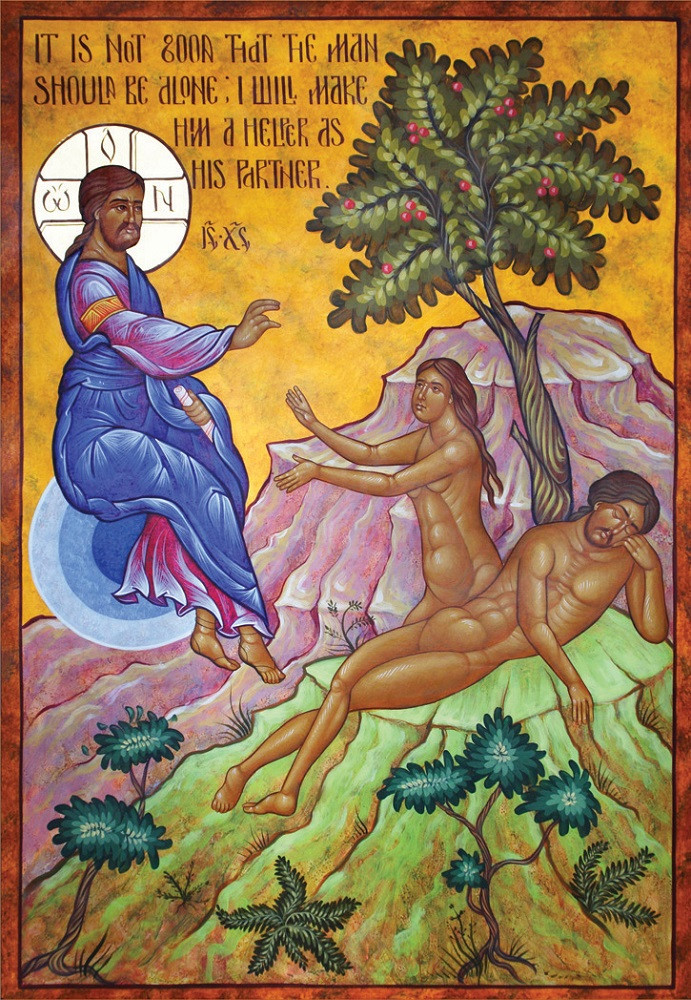
וַיֹּ֙אמֶר֙ יְהֹוָ֣ה אֱלֹהִ֔ים לֹא־ט֛וֹב הֱי֥וֹת הָֽאָדָ֖ם לְבַדּ֑וֹ אֶֽעֱשֶׂה־לּ֥וֹ עֵ֖זֶר כְּנֶגְדּֽוֹ׃
“And the Lord God said, It is not good that the man should be alone; I will make him an help meet for him.”
God says that it is “not good”, לֹא־ט֛וֹב, for the man Adam to be alone, לְבַד. So God says he will make for him an עֵ֖זֶר כְּנֶגְדּֽוֹ.
The KJV translated עֵ֖זֶר כְּנֶגְדּֽוֹ as “help meet for him”, which was a perfectly respectable way to render it I think. In more modernized English we might say “helper suitable for him”. In the KJV it wasn’t a compound word, “helpmeet”, but two words, “help meet”. Eventually a new word, “helpmeet” did arise in the English language, and it seems this can and has had some undertones of subordination. It is a real word in English now. But it’s not what’s actually in the KJV. In Hebrew it’s more or less a moot point because the phrase עֵ֖זֶר כְּנֶגְדּֽוֹ itself is independent of any of the translation history into English. The word עֵזֶר, help or helper, carries no undertones of subordination. It’s actually often used to refer to God. For example, Psalm 124:8 says עֶ֭זְרֵנוּ בְּשֵׁ֣ם יְהֹוָ֑ה, “our help is the name of God”. An עֵזֶר is not a servant, עֶבֶד, but one who helps, often from a position of strength.
Most people have probably heard the word עֵזֶר before in the name Ebenezer, which comes from the Hebrew אֶבֶן הָעֵזֶר (Eben-Ezer), which means the stone (אֶבֶן) of help (עֵזֶר). This occurs in 1 Samuel 7:12, in which Samuel sets up a stone, אֶבֶן, and calls it אֶבֶן הָעֵזֶר, saying “God has helped us”, עֲזָרָ֥נוּ יְהֹוָֽה.
Another interesting bit of trivia is that in the song “Come Thou Fount” it should be pronounced “Eben-Ezer” as in Hebrew and not “Ebenezer” as in Ebenezer Scrooge. This also works with the rhyme scheme in the lyrics, in which “Ezer” is supposed to rhyme with “pleasure”, which the English name “Ebenezer” does not. So the verse is:
“Here I raise my [Eben-Ezer];
hither by thy help I’m come;
and I hope, by thy good pleasure,
safely to arrive at home.”
So now we can all sing it correctly!
That second word in עֵ֖זֶר כְּנֶגְדּֽוֹ is נֶגֶד, which means in front of, in sight of, opposite to (Brown-Driver-Briggs, נֶגֶד). The “-oh” ending, נֶגְדּֽוֹ, is a pronominal suffix, meaning in front of him, or opposite to him. כְּנֶגְדּֽוֹ is sometimes translated as “corresponding to him” (CSB).
Genesis 2:21
וַיַּפֵּל֩ יְהֹוָ֨ה אֱלֹהִ֧ים ׀ תַּרְדֵּמָ֛ה עַל־הָאָדָ֖ם וַיִּישָׁ֑ן וַיִּקַּ֗ח אַחַת֙ מִצַּלְעֹתָ֔יו וַיִּסְגֹּ֥ר בָּשָׂ֖ר תַּחְתֶּֽנָּה׃
“And the Lord God caused a deep sleep to fall upon Adam, and he slept: and he took one of his ribs, and closed up the flesh instead thereof”
The first word of this verse, וַיַּפֵּל֩, is a Hifil form of the verb נָפַל, to fall. In its Hifil form this becomes causative, so “to fall” becomes “cause to fall”. We don’t see a hey prefix in the consecutive imperfect, third-person masculine singular. But in the imperfect and consecutive imperfect the Hifil does other, less obvious things that distinguish it. In the Qal form this would be וְיִפֹּל, “and he fell”. The yud prefix has a ḥireq “ee” vowel sound. In the Hifil form it’s וַיַּפֵּל֩, “and he caused to fall”, in which the yud prefix has a pataḥ “ah” vowel sound. That’s one difference with the Hifil.
Another thing to note here is that the nun in נָפַל seems to disappear in both of these forms: וְיִפֹּל and וַיַּפֵּל֩. Rather than disappearing, the nun assimilates with the pey. Whereas in נָפַל the pey is in its soft form, like the letter ‘f’, when the nun assimilates you add a dagesh and it becomes a hard pey, like the letter ‘p’. It’s like the pey lengthens as it takes in the nun. So it’s better to think of it as the nun still being there, just in a different form. This is something that is actually very common for the nun to do so it’s something to keep an eye out for. This is one of those examples of what Michael Carasik calls “how Hebrew letters behave”.
Another vocabulary word in this verse is לָקַח, to take. The initial lamed just drops out in this form. So it reads God took, וַיִּקַּ֗ח a rib from Adam.
Genesis 2:22
וַיִּ֩בֶן֩ יְהֹוָ֨ה אֱלֹהִ֧ים ׀ אֶֽת־הַצֵּלָ֛ע אֲשֶׁר־לָקַ֥ח מִן־הָֽאָדָ֖ם לְאִשָּׁ֑ה וַיְבִאֶ֖הָ אֶל־הָֽאָדָֽם׃
“And the rib, which the Lord God had taken from man, made he a woman, and brought her unto the man.”
There’s another Hiphil in this verse. God brought her, וַיְבִאֶ֖הָ, to Adam. The verb is בּוֹא, to go or to come. In the Hiphil this becomes הֵבִיא, he makes to come or he brought. In this verse it’s in the wayyiqtol form, וַיָּבֵא, where the Hiphil is a little harder to see. But I still wanted to point it out because I think it’s a nice illustration of the Hiphil.
A vocabulary word for this verse is אִשָּׁה, woman. This is very similar to the word for man, אִישׁ. This similarity is commented on in the next verse.
Genesis 2:23
וַיֹּ֘אמֶר֮ הָֽאָדָם֒ זֹ֣את הַפַּ֗עַם עֶ֚צֶם מֵֽעֲצָמַ֔י וּבָשָׂ֖ר מִבְּשָׂרִ֑י לְזֹאת֙ יִקָּרֵ֣א אִשָּׁ֔ה כִּ֥י מֵאִ֖ישׁ לֻֽקְחָה־זֹּֽאת׃
“And Adam said, This is now bone of my bones, and flesh of my flesh: she shall be called Woman, because she was taken out of Man.”
The vocabulary words for this verse are עֶצֶם (bone) and בָּשָׂר (flesh). This verse also has some good examples of the possessive suffixes. So with bone, עֶצֶם, my bone is עֲצָמַ֔י and from my bone is מֵֽעֲצָמַ֔י. And with flesh, בָּשָׂר, my flesh is בְּשָׂרִ֑י and from my flesh is מִבְּשָׂרִ֑י.
There are two interesting binyan forms in this verse, a Niphal and a Qal passive. Adam said of Eve, “she shall be called”, יִקָּרֵ֣א. The verb here is קָרָא, to call. In the Niphal form this becomes passive. In the imperfect, masculine singular, “shall be called”. One feature of the Niphal in the imperfect is a dagesh in the first root letter. So there is a dagesh in the kof. That first root letter also has a qammatz, “ah” vowel sound, which is characteristic of the Niphal in the imperfect. Adam also explains that the woman is called אִשָּׁה because it was from man, אִישׁ, that she was taken, לֻֽקְחָה. This is the verb לָקַח, to take, that we saw before. This is another passive verb form, but instead of using the Niphal a passive form of the Qal is used. The passive form of the Qal has some similarity to another passive form, the Pu’al, in which there is a “oo” sound used with the passive. So where the active form, she took, would be לָקְחָה, the passive form, she was taken, is לֻֽקְחָה, with that characteristic “oo” sound, here indicated with a qubbutz under the first root letter.
Genesis 2:24
עַל־כֵּן֙ יַֽעֲזׇב־אִ֔ישׁ אֶת־אָבִ֖יו וְאֶת־אִמּ֑וֹ וְדָבַ֣ק בְּאִשְׁתּ֔וֹ וְהָי֖וּ לְבָשָׂ֥ר אֶחָֽד׃
“Therefore shall a man leave his father and his mother, and shall cleave unto his wife: and they shall be one flesh.”
The first vocabulary word from this verse is עָזַב, to leave. This is another word you may have heard before, but in its Aramaic cognate. When Jesus was on the cross he cried out, “Eloi, Eloi, lama sabachthani?”, אֱלָהִי אֱלָהִי לְמָא שְׁבַקְתַּנִי (Mark 15:34). The Aramaic שבק is a cognate of the Hebrew עָזַב. The line is a quotation from Psalm 22:1, אֵלִ֣י אֵ֭לִי לָמָ֣ה עֲזַבְתָּ֑נִי. So where in Aramaic “you have forsaken me” is שְׁבַקְתַּנִי, in Hebrew it is עֲזַבְתָּ֑נִי from the verb עָזַב.
The next two vocabulary words are אָב (father) and אֵם (mother). In this verse these are both in the possessive form with possessive suffixes. So his father is אָבִיו and his mother is אִמּוֹ.
The last vocabulary word in this verse is דָּבַק, to cling. A man shall cling to his wife.
Genesis 2:25
וַיִּֽהְי֤וּ שְׁנֵיהֶם֙ עֲרוּמִּ֔ים הָֽאָדָ֖ם וְאִשְׁתּ֑וֹ וְלֹ֖א יִתְבֹּשָֽׁשׁוּ׃
“And they were both naked, the man and his wife, and were not ashamed.”
The vocabulary word in this verse is עָרוֹם, naked. Here it’s both the man and woman, plural, who are naked so עָרוֹם becomes עֲרוּמִּים. Interestingly, an almost identical word occurs in the next verse (Genesis 3:1). The serpent is said to be “cunning”, עָר֔וּם. This seems to be a deliberate bit of wordplay.
Lastly we have one more binyan in this verse, a Hitpa’el. It says that they were not ashamed. The verb here is בּוֺשׁ. In the Hitpa’el this becomes reflexive, so we might say they were not ashamed of themselves. The verb בּוֺשׁ is what is called a hollow verb and sometimes gets an extra letter shin, as it does here. The Hitpa’el is pretty easy to recognize because it has either a hey and a tav as a prefix, or at least a tav. In the perfect third person plural the Hitpa’el of בּוֺשׁ is הִתְבּוֹשֵׁשׁ, in which we see that full “hit” prefix with both the hey and the tav. In the imperfect, יִתְבֹּשָֽׁשׁוּ, we lose the hey but that tav still helps us see that this is a Hitpa’el.
To review, let’s list the 7 binyanim again:
Qal – basic (active)
Niphal – passive, reflexive
Piel – intensive
Pu’al – passive intensive
Hiphil – causative
Hophal – passive causative
Hitpa’el – reflexive, reciprocal
And let’s review the vocabulary we saw in these verses. In the following I’ll just give the basic, dictionary form of each word, not necessarily the form in which it occurs in the verse. This is just to make reviewing the vocabulary easier. Refer to the verses again to see and understand the forms in which they occur.
אָדָם – adam – Human, mankind
עָשָׂה – asah – To do, make
צֶלֶם – tzelem – Image
דְּמוּת – demut – Likeness
Let us make, עָשָׂה (asah), man, אָדָם (adam), in our image, צֶלֶם (tzelem), after our likeness, דְּמוּת (demut).
זָכָר – zachar – Male
נְקֵבָה – neqebah – Female
Male, זָכָר (zachar) and female, נְקֵבָ (neqebah), created he them.
אִישׁ – ish – Man
אִשָּׁה – ishah – Woman
She shall be called Woman, אִשָּׁה (ishah), because she was taken out of Man, אִישׁ (ish).
רָקִיעַ – raqia – Expanse
And let them be for lights in the firmament, רָקִיעַ (raqia), of the heaven.
בָרַךְ – barak – To bless
פָרָה – parah – To be fruitful
רָבָה – rabah – To multiply
מָלֵא – male – To fill
And God blessed, בָרַךְ (barak), them, and God said unto them, Be fruitful, פָרָה (parah), and multiply, רָבָה (rabah), and fill, מָלֵא (male), the earth.
יָצַר – yatsar – To form, fashion
עָפַר – aphar – Dust
אֲדָמָה – adamah – Ground
נֶפֶשׁ – nephesh – Soul
And the Lord God formed, יָצַר (yatsar), man, אָדָם (adam), of the dust, עָפַר (aphar), of the ground, אֲדָמָה (adamah), and breathed into his nostrils the breath of life; and man became a living soul, נֶפֶשׁ (nephesh).
לְבַד – lebad – Alone
עֵזֶר – ezer – Help
נֶגֶד – neged – In front of
It is not good that the man should be alone, לְבַד (lebad), I will make him an help, עֵזֶר (ezer), in front, נֶגֶד (neged), of him.
נָפַל – nafal – To fall
לָקַח – laqach -To take
And the Lord God caused to fall, נָפַל (nafal), a deep sleep upon Adam, and he slept: and he took, לָקַח (laqach), one of his ribs.
עֶצֶם – etzem – Bone, selfsame
בָּשָׂר – basar – Flesh
This is now bone, עֶצֶם (etzem), of my bones, and flesh, בָּשָׂר (basar), of my flesh.
עָזַב – azav – Leave
אָב – av – Father
אֵם – em – Mother
דָּבַק – dabaq – To Cling
Therefore shall a man leave, עָזַב (azav), his father, אָב (av), and his mother, אֵם (em), and shall cleave, דָּבַק (dabaq), unto his wife.
עָרוֹם – arum – Naked
בּוֺשׁ – bosh – To be ashamed
And they were both naked, עָרוֹם (arum) …and were not ashamed, בּוֺשׁ (bosh).
With language study repetition is key. These verses have some great vocabulary. I find that words also seem to stick better when you tie them to some specific text or situation. These verses are very memorable so I think they make great anchors for that kind of memorization.
Thanks for listening. See you next time.