Todd and Tyler continue their discussion about the Septuagint, an ancient Greek translation of the Hebrew Bible. Important Septuagint passages that show up in the New Testament like “a virgin shall conceive” (Isaiah 7:14) and “recovering of sight to the blind” (Isaiah 61:1). Paul’s deep roots in the Septuagint text. The ways that scriptures can accrue meaning and significance, like Christological meaning. And the ways the Septuagint can give us insight into how Second Temple Jews understood the Hebrew Bible.
Todd and Tyler talk about the Septuagint, an ancient Greek translation of the Hebrew Bible. The Hellenistic character of Diaspora Judaism and early Christianity. The importance of the Septuagint to our understanding of the development of the Hebrew Bible texts. The ways that the Septuagint was used by New Testament authors. And ways that Septuagint translators sometimes shifted the meaning of certain passages with their translation choices. We really just got started so we expect to pick up the topic again next week!
Notes:
Isaiah 6:10
Make the heart of this people fat, and make their ears heavy, and shut their eyes; lest they see with their eyes, and hear with their ears, and understand with their heart, and convert, and be healed. (KJV)
LXX: “For the heart of this people has become gross, and their ears are dull of hearing, and their eyes have they closed; lest they should see with their eyes, and hear with their ears, and understand with their heart, and be converted and and I should heal them.”
The Hebrew hashmen, “make fat”, is an imperative. The Greek epachunthe, “made fat”is not a command but is a third person past tense or aorist. It’s saying what did happen. The hebrew va-enav hasha, “shut their eyes”, is an imperative. The greek ekammusan, “they shut”, is again a third person past tense or aorist. Saying what did happen.
The LORD is a man of war the LORD is his name (KJV)
יְהוָ֖ה אִ֣ישׁ מִלְחָמָ֑ה יְהוָ֖ה שְׁמֹֽו׃
LXX: “The Lord bringing wars to nought, the Lord is his name.”
Κύριος συντρίβων πολέμους, Κύριος ὄνομα αὐτῷ.
In place of the Hebrew ish milchamah, “man of war”, the Greek uses suntribon polemous, “bringing wars to nought. From suntribo, συντρίβω, “shatter, crush, beat, win”. But it is polemos, πόλεμος, “war” itself that is the object of this defeat.
Psalm 9:20
Put them in fear, O LORD that the nations may know themselves to be but men Selah (KJV)
The Septuagint can give us some insights into the Hebrew language as well. The most notable example is the change in pronunciation of the Hebrew letter ayin, ע. Today the ayin is silent but in ancient times there were two forms, one of which had a kind of ‘g’ sound to it, called a ghayn, still present in Arabic. It since merged with ayin in most Semitic languages except for Arabic. Biblical Hebrew, as of the 3rd century BCE, apparently still distinguished the phonemes, based on transcriptions in the Septuagint. In Hebrew the word for Gamorrah is עֲמֹרָה (‘Ămōrā). In the Septuagint this is rendered as Γόμορρᾰ (Gómorrha). So we know that that form of ayin was used for that word.
Septuagint as and Inspired Translation
“We are right in believing that the translators of the Septuagint had received the spirit of prophecy; and so if, with its authority, they altered anything and used expressions in their translation different from those of the original, we should not doubt that these expressions also were divinely inspired.” (Augustine, City of God 15.23)
“Accordingly, when anyone claims, ‘Moses meant what I say,’ and another retorts, ‘No, rather what I find there,’ I think that I will be answering in a more religious spirit if I say, ‘Why not both, if both are true?’ And if there is a third possibility, and a fourth, and if someone else sees an entirely different meaning in these words, why should we not think that he was aware of all of them?” (Augustine, Confessions 12.31.42)
Todd and Tyler talk about Bible translations. Translation approaches ranging from word-for-word to thought-for-thought. How different translations handle idioms. The vast number of Bible translations. And the different preferences that people and groups have.
NIV: I will surely bless you and make your descendants as numerous as the stars in the sky
NRSV: I will indeed bless you, and I will make your offspring as numerous as the stars of heaven
KJV: That in blessing I will bless thee, and in multiplying I will multiply thy seed as the stars of the heaven
KJV mimics the pattern of the Hebrew use of the repeated verb: barek abarekha, harbah arbeh. The infinitive absolute immediately precedes a perfect of imperfect verbal form of the same root in order to emphasize the verbal meaning.
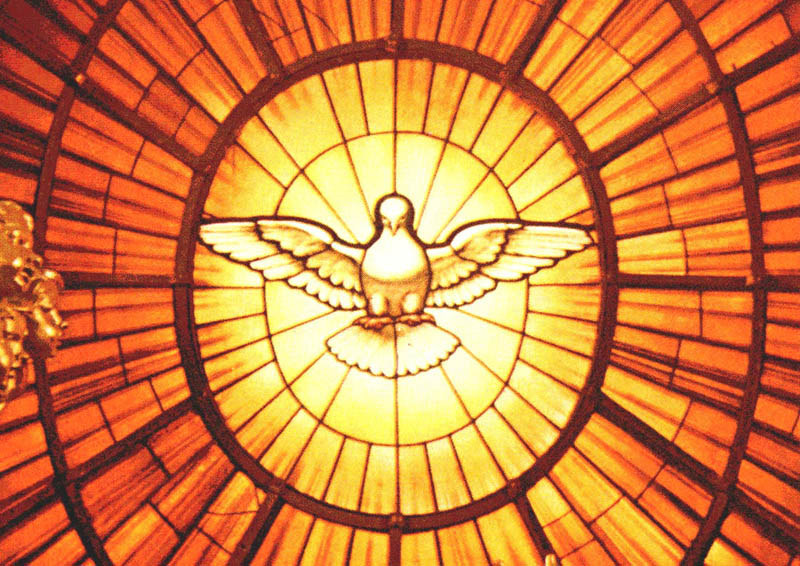
A life with the Holy Spirit is wonderful, exciting, challenging, and meaningful. One of my core beliefs is that there’s much more to reality and the possibilities of our existence than we can possibly imagine. Just a tremendous “more”. Greater in scope, finer in detail, richer in complexity and beauty. And this is something I can see most fully through the illumination of the Holy Spirit. It’s like something I never could have imagined possible before experiencing it. A taste of the overwhelming joy that comes from the power of the Holy Spirit goes a long way to shift a person’s perspective on what kind of life is possible. It changes everything.
We see a lot in the news about each generation becoming more secular over time. The rise of the “Nones” (N-O-N-E-S), those who belong to or believe in no religion. There are many ways to respond to that. Maybe this is a good thing and will ultimately lead to a more peaceful and tolerant world. Or maybe it’s a troubling sign that the foundations of our culture and civilization are eroding. Lots has been written in support of both of those and I’ve believed both of them at one time or another. And still haven’t fully rejected either of them. There’s lots of interesting stuff to talk about there. But what’s interested me most recently and motivated my missionary impulse is more the religious life itself and what it means not to have a rich religious life. In other words, what is it that people are missing out on?
I think what’s got me thinking about things in this way is just my own experience, especially recently, in living a life with the Holy Spirit, knowing what that’s like and how wonderful it is. Wonderful, exciting, challenging, and meaningful. One of my core beliefs is that there’s much more to reality and the possibilities of our existence than we can possibly imagine. Just a tremendous “more”. Greater in scope, finer in detail, richer in complexity and beauty. And this is something I can see most fully through the illumination of the Holy Spirit. It’s like something I never could have imagined possible before experiencing it. A taste of the overwhelming joy that comes from the power of the Holy Spirit goes a long way to shift a person’s perspective on what kind of life is possible. It changes everything.
So that’s what interests me most. I think it’s great that the world is becoming wealthier and healthier, more peaceful and tolerant, and that people have more opportunities. I want that to continue. For sure. But there’s even more. Possibilities to life that go even more directly to the core of who we are and what we can be. It’s challenging. It’s all-demanding and all-transforming. But astoundingly, it’s worth it.
Jesus gave a dramatic illustration of this in a parable:
“Again, the kingdom of heaven is like a merchant seeking beautiful pearls, who, when he had found one pearl of great price, went and sold all that he had and bought it.” (Matthew 13:45-46)
This is how I feel about life with the Holy Spirit. It’s worth giving up anything that stands in the way of it and it’s worth doing anything to have it. Imagine what it must have been like for the disciples to hear this from Jesus. Peter spoke for all of them when he said: “See, we have left all and followed You.” (Matthew 19:27) Admirable and astounding devotion. But why would they have done that?
There’s probably some mystery to that. Dietrich Bonhoeffer proposed in his theology that the response of obedience evades justifying reasons and is attributable only to the “absolute, direct, and unaccountable authority of Jesus” (The Cost of Discipleship). That might be. Certainly there was a call and there always is. Paul said there has to be:
“How then shall they call on Him in whom they have not believed? And how shall they believe in Him of whom they have not heard? And how shall they hear without a preacher?” (Romans 10:14)
The disciples heard the call and they obeyed.
“As He passed by, He saw Levi the son of Alphaeus sitting at the tax office. And He said to him, ‘Follow Me.’ So he arose and followed Him.” (Mark 2:14)
“And Jesus, walking by the Sea of Galilee, saw two brothers, Simon called Peter, and Andrew his brother, casting a net into the sea; for they were fishermen. Then He said to them, ‘Follow Me, and I will make you fishers of men.’ They immediately left their nets and followed Him. Going on from there, He saw two other brothers, James the son of Zebedee, and John his brother, in the boat with Zebedee their father, mending their nets. He called them, and immediately they left the boat and their father, and followed Him.” (Matthew 4:18-22)
They just got up and left everything they had and immediately followed Christ.
Even if the Holy Spirit is not something you’ve personally experienced, these examples should at least give an idea of the absolute power of its driving force. Imagine the kind of purpose this grants to a person’s life. Sometimes we’re just looking for a reason to get up in the morning, go out the door, and go to work. The Spirit got these people to get up, leave everything, and not look back for a moment, to follow Christ. That’s a maximal sense of purpose right there. You think about one of Jesus’s wonderful paradoxes: “he who loses his life for My sake will find it.” (Matthew 10:39) Paul talked about walking “in newness of life” (Romans 6:4). The disciples had a completely new kind of life. They lost their old life but they found a new kind of life that was tremendously more alive.
Paul was someone who knew something about newness of life. His own life had taken a radical change in direction with his experience on the road to Damascus. From that moment on nothing was the same. Saul of Tarsus became Paul, servant of Christ Jesus. Like the other disciples he left everything and dedicated the rest of his life to Christ. Paul was a zealous missionary but we also see repeatedly in his letters his awareness that it is ultimately the Spirit that converts and transforms people. He told the Corinthians: “I planted, Apollos watered, but God gave the increase.” (1 Corinthians 3:6). Though he was very adept in rhetoric and knowledgeable of Torah everything ultimately came down to the work of the Spirit.
This is important. The Gospel of Christ is not just a system of ideas, though it is certainly intellectually rich and stimulating. But it’s much more than that. And it defies standard categories. Dietrich Bonhoeffer said:
“To try and force the Word on the world by hook or by crook is to make the living Word of God into a mere idea, and the world would be perfectly justified in refusing to listen to an idea for which it had no use.” (The Cost of Discipleship)
Paul plays up the unreasonableness of the Gospel, calling it “foolishness” to the “natural man” (1 Corinthians 2:14). I think that’s a bit of a deft rhetorical overstatement. The Gospel is coherent, consistent, and rational. But many systems of thought are coherent, consistent, and rational, at least on their own terms. What makes the Gospel different? Now I do think the rich Christian intellectual tradition can go a long way to make it appealing to the intellectually curious. It opens up a space. I say that out of my own experience. But there’s more. And it’s that more that separates it from the rest so that it’s not just one more system of thought among others. And that is something that is communicated by the Spirit.
There’s something of the gospel that is incommunicable and even unimaginable by any other means. Paul wrote to the Corinthians, paraphrasing Isaiah:
“Eye has not seen, nor ear heard,
Nor have entered into the heart of man
The things which God has prepared for those who love Him.”
(1 Corinthians 2:9)
This reminds a little of Shakespeare’s Hamlet saying to Horatio: “There are more things in heaven and earth, Horatio, Than are dreamt of in your philosophy.” Paul says that there is more out there than most of us have ever considered. How can you come to know and experience something you don’t even know is there? Paul says:
“But God has revealed them to us through His Spirit. For the Spirit searches all things, yes, the deep things of God. For what man knows the things of a man except the spirit of the man which is in him? Even so no one knows the things of God except the Spirit of God. Now we have received, not the spirit of the world, but the Spirit who is from God, that we might know the things that have been freely given to us by God.” (1 Corinthians 2:10-12)
“The deep things of God”. This is where the vault of the heavens, the upper ceiling capping off the limits of our imagination and what is possible can get blown open and expanded. Paul wanted the Church to be able “to comprehend with all the saints what is the width and length and depth and height—to know the love of Christ which passes knowledge; that you may be filled with all the fullness of God.” (Ephesians 3:18-19)
We see in Paul’s letters that he says many times that he’s praying for the Church so that the Spirit will be at work among them. He said to the Colossians:
“For this reason we also, since the day we heard it, do not cease to pray for you, and to ask that you may be filled with the knowledge of His will in all wisdom and spiritual understanding; that you may walk worthy of the Lord, fully pleasing Him, being fruitful in every good work and increasing in the knowledge of God; strengthened with all might, according to His glorious power, for all patience and longsuffering with joy; giving thanks to the Father who has qualified us to be partakers of the inheritance of the saints in the light.” (Colossians 1:9-12)
This stands out to me because it conforms very much to my own experience with the Spirit. In particular, the effect of being “strengthened with all might, according to His glorious power, for all patience and longsuffering with joy”. One of the things I’ve noticed that follows my experiences of being filled up with spiritual light is a change in my natural inclinations. To be more patient. My sphere of concern is redirected further outward, away from my own interests. This just happens. And it’s wonderful. These “fruits of the Spirit”. Paul listed various fruits of the Spirit in his letter to the Galatians:
“But the fruit of the Spirit is love, joy, peace, longsuffering, kindness, goodness, faithfulness, gentleness, self-control. Against such there is no law. And those who are Christ’s have crucified the flesh with its passions and desires. If we live in the Spirit, let us also walk in the Spirit.” (Galatians 5:22-25)
Doesn’t that sound wonderful? To have that kind of conversion of character? This is what it’s like to “walk in the Spirit”. And it’s not self-produced. It requires sacrifice and effort but the fruits come from the Holy Spirit.
Paul wrote to the Ephesians:
“Therefore I also, after I heard of your faith in the Lord Jesus and your love for all the saints, do not cease to give thanks for you, making mention of you in my prayers: that the God of our Lord Jesus Christ, the Father of glory, may give to you the spirit of wisdom and revelation in the knowledge of Him, the eyes of your understanding being enlightened; that you may know what is the hope of His calling, what are the riches of the glory of His inheritance in the saints.” (Ephesians 1:15-18)
Here’s another instance of the pattern in which a missionary prays for the church to be given the Spirit to illuminate and transform them. Paul says that, with the Spirit, the eyes of the understanding may be enlightened. This is the only way to be so enlightened because “no one knows the things of God except the Spirit of God” (1 Corinthians 2:11)
I imagine Paul’s desire for the Spirit to act on the church came from a place of deep love, which is itself a gift of the Spirit (1 Corinthians 13). This isn’t the kind of thing a person can just keep to oneself. It’s a sentiment I very much relate to and also feel deeply. The desire to see others experience the same power is persistent.
There are, of course, various sociological and political reasons that I can think of to want to see people in my community, local and global, have a strong religious base. Many benefits from that. Along with certain risks and potential harms that misdirected religiosity can have. But beyond all those important secondary effects is the primary work of the Spirit itself in a person’s soul. Like the pearl of great price, a life with the Holy Spirit is something I would do anything and give up anything to have. It strikes to the heart of the human soul and satisfies its deepest need for meaning and purpose.


 Todd Decker