Todd and Tyler talk about Bible translations. Translation approaches ranging from word-for-word to thought-for-thought. How different translations handle idioms. The vast number of Bible translations. And the different preferences that people and groups have.
NIV: I will surely bless you and make your descendants as numerous as the stars in the sky
NRSV: I will indeed bless you, and I will make your offspring as numerous as the stars of heaven
KJV: That in blessing I will bless thee, and in multiplying I will multiply thy seed as the stars of the heaven
KJV mimics the pattern of the Hebrew use of the repeated verb: barek abarekha, harbah arbeh. The infinitive absolute immediately precedes a perfect of imperfect verbal form of the same root in order to emphasize the verbal meaning.
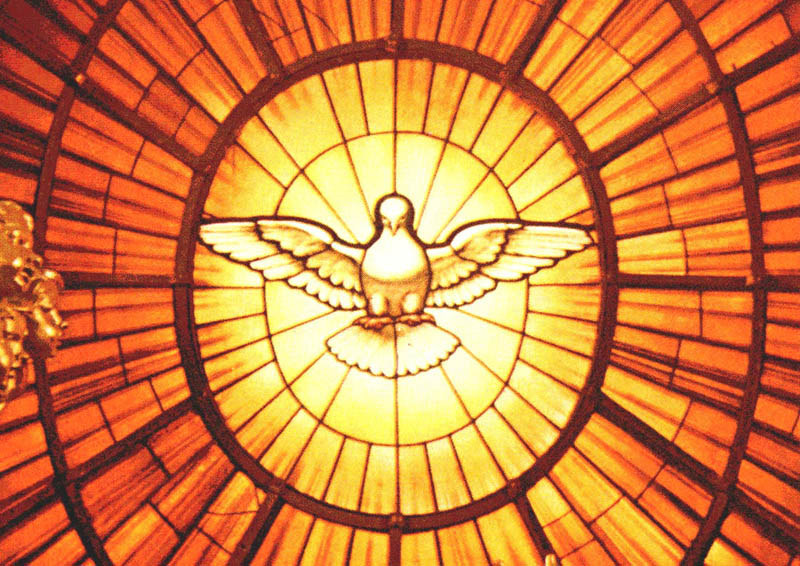
A life with the Holy Spirit is wonderful, exciting, challenging, and meaningful. One of my core beliefs is that there’s much more to reality and the possibilities of our existence than we can possibly imagine. Just a tremendous “more”. Greater in scope, finer in detail, richer in complexity and beauty. And this is something I can see most fully through the illumination of the Holy Spirit. It’s like something I never could have imagined possible before experiencing it. A taste of the overwhelming joy that comes from the power of the Holy Spirit goes a long way to shift a person’s perspective on what kind of life is possible. It changes everything.
We see a lot in the news about each generation becoming more secular over time. The rise of the “Nones” (N-O-N-E-S), those who belong to or believe in no religion. There are many ways to respond to that. Maybe this is a good thing and will ultimately lead to a more peaceful and tolerant world. Or maybe it’s a troubling sign that the foundations of our culture and civilization are eroding. Lots has been written in support of both of those and I’ve believed both of them at one time or another. And still haven’t fully rejected either of them. There’s lots of interesting stuff to talk about there. But what’s interested me most recently and motivated my missionary impulse is more the religious life itself and what it means not to have a rich religious life. In other words, what is it that people are missing out on?
I think what’s got me thinking about things in this way is just my own experience, especially recently, in living a life with the Holy Spirit, knowing what that’s like and how wonderful it is. Wonderful, exciting, challenging, and meaningful. One of my core beliefs is that there’s much more to reality and the possibilities of our existence than we can possibly imagine. Just a tremendous “more”. Greater in scope, finer in detail, richer in complexity and beauty. And this is something I can see most fully through the illumination of the Holy Spirit. It’s like something I never could have imagined possible before experiencing it. A taste of the overwhelming joy that comes from the power of the Holy Spirit goes a long way to shift a person’s perspective on what kind of life is possible. It changes everything.
So that’s what interests me most. I think it’s great that the world is becoming wealthier and healthier, more peaceful and tolerant, and that people have more opportunities. I want that to continue. For sure. But there’s even more. Possibilities to life that go even more directly to the core of who we are and what we can be. It’s challenging. It’s all-demanding and all-transforming. But astoundingly, it’s worth it.
Jesus gave a dramatic illustration of this in a parable:
“Again, the kingdom of heaven is like a merchant seeking beautiful pearls, who, when he had found one pearl of great price, went and sold all that he had and bought it.” (Matthew 13:45-46)
This is how I feel about life with the Holy Spirit. It’s worth giving up anything that stands in the way of it and it’s worth doing anything to have it. Imagine what it must have been like for the disciples to hear this from Jesus. Peter spoke for all of them when he said: “See, we have left all and followed You.” (Matthew 19:27) Admirable and astounding devotion. But why would they have done that?
There’s probably some mystery to that. Dietrich Bonhoeffer proposed in his theology that the response of obedience evades justifying reasons and is attributable only to the “absolute, direct, and unaccountable authority of Jesus” (The Cost of Discipleship). That might be. Certainly there was a call and there always is. Paul said there has to be:
“How then shall they call on Him in whom they have not believed? And how shall they believe in Him of whom they have not heard? And how shall they hear without a preacher?” (Romans 10:14)
The disciples heard the call and they obeyed.
“As He passed by, He saw Levi the son of Alphaeus sitting at the tax office. And He said to him, ‘Follow Me.’ So he arose and followed Him.” (Mark 2:14)
“And Jesus, walking by the Sea of Galilee, saw two brothers, Simon called Peter, and Andrew his brother, casting a net into the sea; for they were fishermen. Then He said to them, ‘Follow Me, and I will make you fishers of men.’ They immediately left their nets and followed Him. Going on from there, He saw two other brothers, James the son of Zebedee, and John his brother, in the boat with Zebedee their father, mending their nets. He called them, and immediately they left the boat and their father, and followed Him.” (Matthew 4:18-22)
They just got up and left everything they had and immediately followed Christ.
Even if the Holy Spirit is not something you’ve personally experienced, these examples should at least give an idea of the absolute power of its driving force. Imagine the kind of purpose this grants to a person’s life. Sometimes we’re just looking for a reason to get up in the morning, go out the door, and go to work. The Spirit got these people to get up, leave everything, and not look back for a moment, to follow Christ. That’s a maximal sense of purpose right there. You think about one of Jesus’s wonderful paradoxes: “he who loses his life for My sake will find it.” (Matthew 10:39) Paul talked about walking “in newness of life” (Romans 6:4). The disciples had a completely new kind of life. They lost their old life but they found a new kind of life that was tremendously more alive.
Paul was someone who knew something about newness of life. His own life had taken a radical change in direction with his experience on the road to Damascus. From that moment on nothing was the same. Saul of Tarsus became Paul, servant of Christ Jesus. Like the other disciples he left everything and dedicated the rest of his life to Christ. Paul was a zealous missionary but we also see repeatedly in his letters his awareness that it is ultimately the Spirit that converts and transforms people. He told the Corinthians: “I planted, Apollos watered, but God gave the increase.” (1 Corinthians 3:6). Though he was very adept in rhetoric and knowledgeable of Torah everything ultimately came down to the work of the Spirit.
This is important. The Gospel of Christ is not just a system of ideas, though it is certainly intellectually rich and stimulating. But it’s much more than that. And it defies standard categories. Dietrich Bonhoeffer said:
“To try and force the Word on the world by hook or by crook is to make the living Word of God into a mere idea, and the world would be perfectly justified in refusing to listen to an idea for which it had no use.” (The Cost of Discipleship)
Paul plays up the unreasonableness of the Gospel, calling it “foolishness” to the “natural man” (1 Corinthians 2:14). I think that’s a bit of a deft rhetorical overstatement. The Gospel is coherent, consistent, and rational. But many systems of thought are coherent, consistent, and rational, at least on their own terms. What makes the Gospel different? Now I do think the rich Christian intellectual tradition can go a long way to make it appealing to the intellectually curious. It opens up a space. I say that out of my own experience. But there’s more. And it’s that more that separates it from the rest so that it’s not just one more system of thought among others. And that is something that is communicated by the Spirit.
There’s something of the gospel that is incommunicable and even unimaginable by any other means. Paul wrote to the Corinthians, paraphrasing Isaiah:
“Eye has not seen, nor ear heard,
Nor have entered into the heart of man
The things which God has prepared for those who love Him.”
(1 Corinthians 2:9)
This reminds a little of Shakespeare’s Hamlet saying to Horatio: “There are more things in heaven and earth, Horatio, Than are dreamt of in your philosophy.” Paul says that there is more out there than most of us have ever considered. How can you come to know and experience something you don’t even know is there? Paul says:
“But God has revealed them to us through His Spirit. For the Spirit searches all things, yes, the deep things of God. For what man knows the things of a man except the spirit of the man which is in him? Even so no one knows the things of God except the Spirit of God. Now we have received, not the spirit of the world, but the Spirit who is from God, that we might know the things that have been freely given to us by God.” (1 Corinthians 2:10-12)
“The deep things of God”. This is where the vault of the heavens, the upper ceiling capping off the limits of our imagination and what is possible can get blown open and expanded. Paul wanted the Church to be able “to comprehend with all the saints what is the width and length and depth and height—to know the love of Christ which passes knowledge; that you may be filled with all the fullness of God.” (Ephesians 3:18-19)
We see in Paul’s letters that he says many times that he’s praying for the Church so that the Spirit will be at work among them. He said to the Colossians:
“For this reason we also, since the day we heard it, do not cease to pray for you, and to ask that you may be filled with the knowledge of His will in all wisdom and spiritual understanding; that you may walk worthy of the Lord, fully pleasing Him, being fruitful in every good work and increasing in the knowledge of God; strengthened with all might, according to His glorious power, for all patience and longsuffering with joy; giving thanks to the Father who has qualified us to be partakers of the inheritance of the saints in the light.” (Colossians 1:9-12)
This stands out to me because it conforms very much to my own experience with the Spirit. In particular, the effect of being “strengthened with all might, according to His glorious power, for all patience and longsuffering with joy”. One of the things I’ve noticed that follows my experiences of being filled up with spiritual light is a change in my natural inclinations. To be more patient. My sphere of concern is redirected further outward, away from my own interests. This just happens. And it’s wonderful. These “fruits of the Spirit”. Paul listed various fruits of the Spirit in his letter to the Galatians:
“But the fruit of the Spirit is love, joy, peace, longsuffering, kindness, goodness, faithfulness, gentleness, self-control. Against such there is no law. And those who are Christ’s have crucified the flesh with its passions and desires. If we live in the Spirit, let us also walk in the Spirit.” (Galatians 5:22-25)
Doesn’t that sound wonderful? To have that kind of conversion of character? This is what it’s like to “walk in the Spirit”. And it’s not self-produced. It requires sacrifice and effort but the fruits come from the Holy Spirit.
Paul wrote to the Ephesians:
“Therefore I also, after I heard of your faith in the Lord Jesus and your love for all the saints, do not cease to give thanks for you, making mention of you in my prayers: that the God of our Lord Jesus Christ, the Father of glory, may give to you the spirit of wisdom and revelation in the knowledge of Him, the eyes of your understanding being enlightened; that you may know what is the hope of His calling, what are the riches of the glory of His inheritance in the saints.” (Ephesians 1:15-18)
Here’s another instance of the pattern in which a missionary prays for the church to be given the Spirit to illuminate and transform them. Paul says that, with the Spirit, the eyes of the understanding may be enlightened. This is the only way to be so enlightened because “no one knows the things of God except the Spirit of God” (1 Corinthians 2:11)
I imagine Paul’s desire for the Spirit to act on the church came from a place of deep love, which is itself a gift of the Spirit (1 Corinthians 13). This isn’t the kind of thing a person can just keep to oneself. It’s a sentiment I very much relate to and also feel deeply. The desire to see others experience the same power is persistent.
There are, of course, various sociological and political reasons that I can think of to want to see people in my community, local and global, have a strong religious base. Many benefits from that. Along with certain risks and potential harms that misdirected religiosity can have. But beyond all those important secondary effects is the primary work of the Spirit itself in a person’s soul. Like the pearl of great price, a life with the Holy Spirit is something I would do anything and give up anything to have. It strikes to the heart of the human soul and satisfies its deepest need for meaning and purpose.
In scripture Christ is called “the image of the invisible God”. As such Christ is supremely important to our access to and understanding of God. As God made his goodness pass over Moses and declared his graciousness and compassion, Christ shows us the Father in his words and in his works. Three important philosopher-theologians: Origen of Alexandria, Augustine of Hippo, and Thomas Aquinas developed theories to explain the process of coming to see and know God in a form of “intellectual vision”.
One of the challenges of religious belief in modern times is that many of the things we are supposed to believe in and refer to in our religious practices are not things that we see or sense with our physical senses. God, for example. We might ask, as many have asked, “Why doesn’t God just show himself to everyone?” Wouldn’t that clear up a lot? Why does God have to be so seemingly “hidden” and why is faith, whatever its purported virtue, even necessary? Some of the explanations for this may sometimes seem kind of forced and unsatisfactory. I think this is something that has to be addressed. And I actually think it’s quite an interesting subject. Not just in terms of apologetics, justifying belief in God or any number of other things we don’t sense with the physical senses. But also interesting just as a way of thinking about the nature of reality and the kinds of things that make it up and undergird it. It gets into some very interesting theological and philosophical issues.
In studying this question my main sources for insight have been the scriptures and a set of important Christian philosopher-theologians. Three in particular:
1. Origen of Alexandria (184 – 253) 2. Augustine of Hippo (354 – 430) 3. Thomas Aquinas (1225 – 1274)
What’s interesting to me in looking at these three is their continuity and consistency. We might be tempted to think sometimes that people who lived hundreds or thousands of years ago must have been less intelligent, educated, or sophisticated than we are in modern times. A few minutes of reading Aristotle can very quickly dispel that notion. And the same goes for these three. In most points I find that their ideas about God, and most things, are the most well-reasoned of any you could find from anyone, ancient or modern. Very few people today, believers or not, have thought about God as rigorously or deeply as they did. And when we look at God as found in scripture and explained systematically by these philosopher-theologians it makes more sense why the world is the way it is and why we stand in relation to God in the way that we do.
Let’s look first at some scriptures. There are many scriptures that talk about seeing or not seeing God. Some examples:
John 1:18 – “No one has seen God at any time.”
Matthew 5:8 – “Blessed are the pure in heart, For they shall see God.”
Exodus 33:11 – “So the Lord spoke to Moses face to face, as a man speaks to his friend.”
Exodus 33:20 – “You cannot see My face; for no man shall see Me, and live.”
Isaiah 6:1,5 – “I saw the Lord sitting on a throne, high and lifted up, and the train of His robe filled the temple… So I said: Woe is me, for I am undone! …For my eyes have seen the King, The Lord of hosts.”
Many passages about seeing God but apparently not all consistent. What to make of that? It could be that the passages are simply inconsistent. A consequence of the texts being authored and compiled by different authors and redactors. It’s certainly the case that it was compiled by different authors and redactors. So that’s one possible explanation. But I think there are more theologically interesting explanations. Apparent contradictions often have a lot of potential to provoke interesting philosophical insight. Whether or not that moves us closer to or further from truth is another question. It can do either. But I think in what follows it moves us closer to truth as well as philosophical insight.
The first of our philosopher-theologians, Origen of Alexandria, in his book On the First Principles (Περὶ Ἀρχῶν), makes an important distinction between things that are (1) not seen and (2) invisible:
“For the same thing is not to be understood by the expressions, ‘those things which are not seen,’ and ‘those things which are invisible.’ For those things which are invisible are not only not seen, but do not even possess the property of visibility, being what the Greeks call asomata, i.e., incorporeal; whereas those of which Paul says, ‘They are not seen,’ possess indeed the property of being seen, but, as he explains, are not yet beheld by those to whom they are promised.”
I think this is a very useful distinction that helps address some of the bafflement over why God would purposely conceal things from us. With this distinction we can see that in at least some cases it may not be that God is purposely concealing things that we would otherwise be capable of seeing, but rather that some things are just not visible by nature. Origen says of John 1:18.
“Moreover, John, in his Gospel, when asserting that ‘no one hath seen God at any time,’ manifestly declares to all who are capable of understanding, that there is no nature to which God is visible: not as if, He were a being who was visible by nature, and merely escaped or baffled the view of a frailer creature, but because by the nature of His being it is impossible for Him to be seen.”
This pertains specifically to physical sight and the physical senses. No one sees God with physical sight. But the same verse says that “The only begotten Son, who is in the bosom of the Father, He has declared Him.” The only begotten Son declares God to us. So we do have access to God but it is through other means than physical sight and senses.
Now, there are cases where deliberate concealment serves some instrumental purpose. Jesus apparently spoke almost entirely in parables, to the point that when he did speak directly it was very unusual. For example, in John 16:29 his apostles say: “See, now You are speaking plainly, and using no figure of speech!” But that was more the exception. Jesus deliberately made his teachings a challenge for his disciples. “Because it has been given to you to know the mysteries of the kingdom of heaven, but to them it has not been given. For whoever has, to him more will be given, and he will have abundance; but whoever does not have, even what he has will be taken away from him. Therefore I speak to them in parables, because seeing they do not see, and hearing they do not hear, nor do they understand.” (Matthew 13:11-13) There are many potential reasons for this form of teaching. One is just the benefit of Socratic “midwifery”. Students sometimes learn things better when they have to work harder for them. So there is that. But I don’t think deliberate concealment is applicable everywhere. There are things unseen. But there are also things that are intrinsically invisible.
So there’s that distinction; between the merely unseen and the intrinsically invisible. But what kinds of things are intrinsically invisible? Would this commit one to belief in supernatural things? In a certain sense I’d say, “yes”, which might be off-putting if you lean more secular or have more secular commitments. But I’d also say that most people tacitly assume or take for granted certain intrinsically invisible things anyway; things that are beyond just those things that subsist in the natural world. Even if we don’t realize it.
One example is abstractions. We make use of abstractions all the time. Some examples are: quantity, quality, relation, causality, possibility. We use these kinds of abstractions to make raw sense data intelligible. For example, we project causation onto events. When one billiard ball moves toward another, comes into contact with the second, and then the second billiard ball starts moving, we say that the first billiard ball caused the second billiard ball to move (by collision and transfer of momentum). That makes sense but we don’t actually see that causation. We see events and those events are only intelligible to us in terms of causation. But we don’t physically see the causation itself. We only “see” it in the intellect. The sciences are essentially projects of characterizing non-physical structures, laws of nature, to explain the data of empirical observations and experiments. We don’t want just isolated data points. We want to be able to describe relations and make predictions.
This way of thinking about the world is by no means obvious. Augustine of Hippo described in his autobiography, Confessions, how he had a very hard time understanding non-material entities. He “could not imagine any substance, but such as is wont to be seen with [the] eyes.” This made it difficult for him to think about God.
“But what else to conceive of Thee I knew not… I was constrained to conceive of Thee… as being in space, whether infused into the world, or diffused infinitely without it. Because whatsoever I conceived, deprived of this space, seemed to me nothing, yea altogether nothing, not even a void, as if a body were taken out of its place, and the place should remain empty of any body at all, of earth and water, air and heaven, yet would it remain a void place, as it were a spacious nothing.”
This is a very natural way to see the world. And I think it’s the way most people think of the world today and even the way we are educated to think. The modern outlook is very materialist or physicalist. Materialism and physicalism are defensible positions. But they’re not the only defensible positions. And I don’t think they hold up very well to extensive philosophical scrutiny. And it’s that kind of philosophical scrutiny that ultimately led Augustine to think past his materialism. He encountered this in the work of the Platonists:
“Thou [God] procuredst for me… certain books of the Platonists.”
“But having read then those books of the Platonists, and thence been taught to search for incorporeal truth, I saw Thy invisible things, understood by those things which are made.”
This is the essence of the process of the natural sciences that we go through even if without thinking about it. We come to understand incorporeal truths “by those things which are made”. We infer causation from the observation of events. We develop theories about laws of nature from empirical data. In Platonist thought this is movement along Plato’s “divided line”, an analogy he introduced in the Republic, moving from visible things to intelligible things.
In Plato’s thought this process of intellectual ascent has a single ending point, which he calls “the Form of the Good” [ἡ τοῦ ἀγαθοῦ ἰδέα (he tou agathou idea)]. Plotinus (205 – 270) called this ultimate principle “the One” [το ἕν (to hen)]. Augustine of course, being Christian, just called this God. The intellectual ascent ultimately leads to the Christian beatific vision, The immediate knowledge of God which the angelic spirits and the souls of the just enjoy in Heaven.
Both Origen and Augustine have theories of a certain form of vision that is distinct from physical vision. For Augustine this is his notion of “intellectual vision”. Origen describes it as a kind of seeing as knowing. In On the First Principles Origen says:
“It is one thing to see, and another to know: to see and to be seen is a property of bodies; to know and to be known, an attribute of intellectual being… [the Son] did not say that no one has seen the Father, save the Son, nor any one the Son, save the Father; but His words are: ‘No one knoweth [ἐπιγινώσκω (epiginosko)] the Son, save the Father; nor any one the Father, save the Son.’ (Matthew 11:27) By which it is clearly shown, that whatever among bodily natures is called seeing and being seen, is termed, between the Father and the Son, a knowing and being known, by means of the power of knowledge, not by the frailness of the sense of sight. Because, then, neither seeing nor being seen can be properly applied to an incorporeal and invisible nature, neither is the Father, in the Gospel, said to be seen by the Son, nor the Son by the Father, but the one is said to be known by the other.”
Augustine develops a similar idea, what he calls “intellectual vision”. In his book On the Literal Meaning of Genesis (De Genesi ad litteram) Augustine distinguished between three sorts of vision.
“These are the three kinds of visions… The first, therefore, let us call Corporeal, due to the fact that it is perceived by the body and revealed by the body’s senses. The second, let us call Imaginative; whatever is not truly of the body, and yet however is to some extent, it is said imagination correctly already: and in any case it is not material, it may be however similar to the body, is in the image of the absent body, nor is the gaze distinguished from itself for that purpose. The third is called Intellectual, from intellect, due to the fact that it is mental, of the mind.” (On the Literal Meaning of Genesis 12.7.16)
Augustine demonstrates the use of these three kinds of vision by giving an example of three levels at which a person can understand the commandment to “love your neighbor as yourself.” (Matthew 22:39) He says:
“Here in the reading of this one command, ‘love thy neighbor as yourself’ (Matthew. 22, 39), occur three types of vision: one is of his eyes, which appears in the writing itself; another is of the human imagination in which one’s neighbor is thought of in his absence; and third of these, which is love as such, as seen by the intellect.”
This is a very simple example from which Augustine demonstrates multiple layers of understanding. And this is similar to the levels of ascent in Plato’s divided line with likenesses of visible things, visible things, and the ideas abstracted from them, visible to the intellect. In reading a text there is the physical visual sensation in which we see the ink imprinted on a page. But while reading that we also think about what things the ink refers to, which is a more sophisticated level of understanding. And finally we can gather general principles from the particular thoughts generated by the text. In the case of this example: from ink, to the thought of one’s neighbor, one eventually thinks about the general principle of love itself. And love as such has no visible image. It is understood thoroughly by the intellect, no doubt accompanied by corresponding sentiments. Augustine says of the things seen in intellectual vision that they “have no images resembling them. The objects of intellectual vision are perceived proprie (“in their own nature”), not imaginaliter (“through a representation”).
Virtues like love are important objects of intellectual vision. And intellectual vision of the virtues is closely tied to the intellectual vision of God. Augustine says:
“This spiritual nature, therefore, in which not the bodies, but similarities to bodies are expressed, having visions of an inferior variety, as that of the mind, even the light of intelligence… they do not have any similar material forms; even as the mind itself and all good dispositions of spirit to which they are opposed in their vices, which are correctly condemned and are even condemned in men. To what end is the intellect to be understood, except truly in some other way? And thus love, joy, peace, longsuffering, kindness, goodness, faith, gentleness, self-control, and so forth, of such by which he is drawn near to God (Galatians 5:22-23) and God himself, from whom all things, through whom all things, in whom all things (Romans 11:36).” (On the Literal Meaning of Genesis 12.24.50)
The idea here being that the mind being able, through intellectual vision, to understand important moral abstractions like the virtues is also able, in a similar way, to eventually understand God, from whom these moral virtues emanate. There’s an interesting example of this kind of vision in Exodus.
In Exodus 33 it says that, “The Lord spoke to Moses face to face.” Not only that but, “as a man speaks to his friend.” They were in close proximity, both in space (of some kind) and in their regard for one another. It is repeated, several times in this chapter, that Moses had found “favor”, חֵן (chen), in the eyes of the Lord. And this favor is repeatedly mentioned as the reason that the Lord grants Moses’s entreaties.
Whatever had happened in verses 11 Moses requests even more. In verse 18 he says: “Please, show me Your glory.” Your כָּבוֹד (kabod). God’s response is interesting. He says: “I will make all My goodness [טוּב (tub)] pass before you, and I will proclaim the name of the Lord before you. I will be gracious to whom I will be gracious, and I will have compassion on whom I will have compassion.” (verse 19) Moses asks to see God’s glory (kabod) and God responds that he will see his goodness (tub). God also declares his capacity to be gracious [חָנַן (chanan)] and to be merciful [רָחַם (racham)].
We see more of this in the next chapter, Exodus 34, in which God proclaims the name of YHWH, saying: “The Lord, the Lord God, merciful [רַחוּם (rachum)] and gracious [חַנּוּן (chanun)], longsuffering, and abounding in goodness [חֵסֵד (chesed)] and truth, keeping mercy for thousands, forgiving iniquity and transgression and sin, by no means clearing the guilty, visiting the iniquity of the fathers upon the children and the children’s children to the third and the fourth generation.” (Exodus 34:6-7) Traditionally this act of self-revelation is known as the Thirteen Attributes. This prayer, the Thirteen Attributes of Mercy, is recited in times of crisis to beseech God to show mercy. It contains thirteen Names and descriptions of God, all of them referring to God’s compassion in various situations. In this remarkable theophany, self-revelation of God, to Moses what we have recorded is a revelation of attributes.
Isn’t that interesting? In what way would Moses, or any other person, perceive these kinds of attributes? Mercy, graciousness, longsuffering, goodness, truth, forgiveness, justice? I think Augustine’s theories make sense here. We could think about them at the three levels of vision: corporeal, imaginative, and intellectual. There are the words for these attributes, taking physical form as ink on a page, pixels on a screen, or sound waves in the air. Then we can imagine, or maybe remember, particular examples of these attributes in individuals, maybe people we know, or people in the scriptures, like especially Jesus Christ. And then we can perceive in the intellect the attributes as such: mercy, graciousness, longsuffering, goodness, truth, forgiveness, justice. And when we do this we are closer to perceiving God himself.
Full perception of God would seem to be beyond our possibility in mortality. The third of our philosopher-theologians, Thomas Aquinas, talks about this in his Summa Theologiae. This comes up in Question 12, Article 11: “Whether anyone in this life can see the essence of God”. Aquinas concludes:
“God cannot be seen in His essence by a mere human being, except he be separated from this mortal life. The reason is because, as was said above, the mode of knowledge follows the mode of the nature of the knower. But our soul, as long as we live in this life, has its being in corporeal matter; hence naturally it knows only what has a form in matter, or what can be known by such a form. Now it is evident that the Divine essence cannot be known through the nature of material things… This can be seen in the fact that the more our soul is abstracted from corporeal things, the more it is capable of receiving abstract intelligible things. Hence in dreams and alienations of the bodily senses divine revelations and foresight of future events are perceived the more clearly.”
This is consistent with the statement by God in Exodus that:
“You cannot see My face; for no man shall see Me, and live.”
What followed after this is (maybe) an intriguing illustration of the partial but necessarily incomplete vision of God that a human may have in mortality. God says:
“Here is a place by Me, and you shall stand on the rock. So it shall be, while My glory passes by, that I will put you in the cleft of the rock, and will cover you with My hand while I pass by. Then I will take away My hand, and you shall see My back; but My face shall not be seen.”’ (Exodus 33:20-23)
God says that Moses will see his back [אָחוֹר (achor)] but not his face [פָנִים (panim)].
What’s going on here? It would seem that Moses’s experience of seeing God must be limited. We might ask, as we asked at the beginning of this episode, is this limitation due to God deliberately withholding the complete vision? Or is it just an intrinsic limitation of the nature of the thing being revealed? To use Origen’s distinction, is the face, panim, of God merely “unseen” or is it actually “invisible”, not capable of being seen physically?
Rabbi Sforno (1470 – 1550) commented on this verse saying (in God’s words): “Your inability to see what you would like to see is not due to My depriving you, personally, of such an experience, but is rooted in man’s inability to see such things unless you had died first, as an eye of flesh and blood cannot see such things. You would be fatally blinded before understanding anything you would see.”
Both Aquinas and Sforno hold that no human can see the essence of God on this side of death. Sforno says “an eye of flesh and blood cannot see such things”. And Aquinas says that “Divine essence cannot be known through the nature of material things.” Knowledge of the divine essence can be approximated, as Aquinas says, “the more our soul is abstracted from corporeal things”. But full knowledge and intellectual vision of God can only be received after physical death, which is why, like Moses, no mortal person can see God and live.
The issue of God and images is prominent throughout the Torah. Making images to worship, even images of the Lord God interestingly enough, are strictly forbidden. The golden calf may have been an attempt to make an image of the Lord God himself. But that didn’t make it any less egregious. The Israelites are given the commandment:
“You shall not make for yourself a carved image [פֶסֶל (pesel)]—any likeness [תִּמוּנָה (temunah)] of anything that is in heaven above, or that is in the earth beneath, or that is in the water under the earth; you shall not bow down to them nor serve them.” (Exodus 20:4-5)
We find an expansion on this commandment in Deuteronomy:
“Take careful heed to yourselves, for you saw no form [תִּמוּנָה (temunah)] when the Lord spoke to you at Horeb out of the midst of the fire, lest you act corruptly and make for yourselves a carved image in the form of any figure: the likeness of male or female, the likeness of any animal that is on the earth or the likeness of any winged bird that flies in the air, the likeness of anything that creeps on the ground or the likeness of any fish that is in the water beneath the earth. And take heed, lest you lift your eyes to heaven, and when you see the sun, the moon, and the stars, all the host of heaven, you feel driven to worship them and serve them, which the Lord your God has given to all the peoples under the whole heaven as a heritage.” (Deuteronomy 4:15-19)
The text here is primarily concerned with the ethical issue of how the Israelites are to conduct themselves, what they should and should not do. But there’s an interesting hint here to a metaphysical matter as well that underlies the ethical. “For you saw no form [תִּמוּנָה (temunah)] when the Lord spoke to you at Horeb out of the midst of the fire.” It’s not just the case that the Israelites shouldn’t make carved images of the Lord; based off of some image that was present but forbidden for them to copy. There wasn’t even an image there. It wouldn’t even be possible in principle for them to make an image of the Lord because there was no temunah.
This is interesting to compare with a couple verses in the first chapter of the Bible:
“Then God said, ‘Let Us make man in Our image [צֶלֶם (tzelem)], according to Our likeness [דְּמוּת (demuth)]; let them have dominion over the fish of the sea, over the birds of the air, and over the cattle, over all the earth and over every creeping thing that creeps on the earth.’ So God created man in His own image [צֶלֶם (tzelem)]; in the image of God He created him; male and female He created them.” (Genesis 1:26-27)
Human beings are made in the image of God. Notably by God. The Hebrew words used here are not the same, but I think the concept is similar enough. In what way are humans created in the “image of God”, in the [צֶ֥לֶם אֱלֹהִ֖ים (tzelem elohim)]? One interesting thing about this tzelem is that it has both male and female manifestations. A lot of possibilities here but one thing I’ll observe is that attributes like humanness, maleness, femaleness, along with virtuous attributes like mercy, graciousness, longsuffering, goodness, truth, forgiveness, justice are abstract concepts that in the philosophies of Augustine and Aquinas are understood most fully by the intellect, rather than through physical form or the image of physical form.
Aquinas developed his theory of knowing and seeing God extensively in his Question 12 of the Summa, Prima Pars: “How God is Known By Us”. First, Aquinas affirmed that it is indeed possible for a created intellect to see the essence of God:
“Since everything is knowable according as it is actual, God, Who is pure act without any admixture of potentiality, is in Himself supremely knowable. But what is supremely knowable in itself, may not be knowable to a particular intellect, on account of the excess of the intelligible object above the intellect.”
Aquinas says that God is not only knowable but “supremely knowable”. God is “pure act”. Here he’s making use of the Aristotelian concepts of potentiality and actuality. Aristotle understood God to be supremely and recursively intellectual, as “a thinking of thinking” [νοήσεως νόησις (noeseos noesis)]:
Quoting from the his Metaphysics:
“Hence it is actuality rather than potentiality that is held to be the divine possession of rational thought, and its active contemplation is that which is most pleasant and best. If, then, the happiness which God always enjoys is as great as that which we enjoy sometimes, it is marvellous; and if it is greater, this is still more marvellous. Nevertheless it is so. Moreover, life belongs to God. For the actuality of thought [νοῦ ἐνέργεια (nou energeia)] is life, and God is that actuality; and the essential actuality of God is life most good and eternal. We hold, then, that God is a living being, eternal, most good; and therefore life and a continuous eternal existence belong to God; for that is what God is.” (Metaphysics 12.1072b)
“The actuality of thought is life, and God is that actuality.” But what is the subject of that thought? Aristotle says: “Mind thinks itself, if it is that which is best; and its thinking is a thinking of thinking (noeseos noesis)”. (Metaphysics 12.1074b)
This being the case, God is supremely intelligible by the intellect. Whatever limitations human beings have to seeing the essence of God in their intellect is due to limitations in the capacities of their intellects, rather than in the intrinsic intelligibility of God. Aquinas says:
“But what is supremely knowable in itself, may not be knowable to a particular intellect, on account of the excess of the intelligible object above the intellect; as, for example, the sun, which is supremely visible, cannot be seen by the bat by reason of its excess of light.”
Not only bats for that matter. Even we humans cannot see the sun directly. But that’s not because it’s not invisible, but rather because it’s too visible. It produces more light than we can handle. That’s a physical analogy. In the case of God the analogy is to intellectual visibility, or intelligibility. If we can’t see God with our intellectual vision it’s not because God is intrinsically unintelligible but rather because God is too intelligible, of greater intelligibility than we are able to understand. Nevertheless, Aquinas does think it is possible for created intellect to see God’s essence. It just needs the aid of divine grace.
In Question 12, Article 4 Aquinas responds to the question of “Whether any created intellect by its natural powers can see the divine essence”. Aquinas concludes that:
“It is impossible for any created intellect to see the essence of God by its own natural power… To know self-subsistent being is natural to the divine intellect alone; and this is beyond the natural power of any created intellect; for no creature is its own existence, forasmuch as its existence is participated. Therefore the created intellect cannot see the essence of God, unless God by His grace unites Himself to the created intellect, as an object made intelligible to it.”
Aquinas is appealing to the fundamental ontological difference between created things and their creator. He says, “To know self-subsistent being is natural to the divine intellect alone.” God is the only self-subsistent being, whose existence is not derived from any other thing. For created beings it’s not natural to know this kind of self-subsistent being. But this kind of knowledge can be given by grace.
So Aquinas is quite optimistic about the possibility of a created intellect seeing the essence of God, with the aid of divine grace. What is the nature of that seeing? Is it with physical sight? Here Aquinas is consistent with both Origen and Augustine. Consistent with Origen’s concept of God’s physical invisibility.
In Question 12, Article 3 Aquinas addresses the question of “Whether the essence of God can be seen with the bodily eye?” He says:
“It is impossible for God to be seen by the sense of sight, or by any other sense, or faculty of the sensitive power. For every such kind of power is the act of a corporeal organ.”
Aquinas makes the case that the kind of sight in which the created intellect may see the essence of God is a sight of some other kind, other than physical sight. He uses the example of Ephesians 1:17-18.
“Likewise the words, ‘Now my eye seeth Thee,’ are to be understood of the mind’s eye, as the Apostle says: ‘May He give unto you the spirit of wisdom… in the knowledge of Him, that the eyes of your heart’ may be ‘enlightened’”.
Wisdom [σοφία (sophia]) and knowledge [ἐπίγνωσις (epignosis)] may enlighten the “eyes of the heart” [τοὺς ὀφθαλμοὺς τῆς καρδίας (tous ophthalmous tes kardias)]. In talking about “eyes of the heart” we’re clearly speaking of something other than physical vision. It’s seeing in another way.
Speaking further of this “intellectual vision” Aquinas says:
“The sense of sight, as being altogether material, cannot be raised up to immateriality. But our intellect, or the angelic intellect, inasmuch as it is elevated above matter in its own nature, can be raised up above its own nature to a higher level by grace.”
“We have a more perfect knowledge of God by grace than by natural reason. Which is proved thus. The knowledge which we have by natural reason contains two things: images derived from the sensible objects; and the natural intelligible light, enabling us to abstract from them intelligible conceptions.”
Bringing this is all to conclusion I’d like to look at examples from scripture in which we are able to see God through His self-revelation in Christ. Paul says that Christ is “the image of the invisible God [εἰκὼν τοῦ Θεοῦ τοῦ ἀοράτου (eikon tou theou tou aoratou)]” (Colossians 1:15). That seems almost like an oxymoron. How can there be an image of something that’s invisible? I think that here again, as in many instances before, we have to think about the possible different meanings of the words so that they can make sense. Two important terms here are image [εἰκών (eikon)] and invisible [ἀόρατος (aoratos)]. Starting with the invisible, we could say that there are aspects of Christ that are physically visible and others that are physically invisible. Christ’s body is certainly visible. But since Christ is God he also has divine attributes that are invisible, just like those of the father. The senses in which Christ is an image are quite rich. Certainly he is a physical image in his body. Paul says that in Christ “dwells all the fullness of the Godhead bodily” [σωματικῶς (somatikos)] (Colossians 1:9). Jesus himself also says:
“I am the way, the truth, and the life. No one comes to the Father except through Me.” (John 14:6)
and
“He who has seen Me has seen the Father; so how can you say, ‘Show us the Father’? Do you not believe that I am in the Father, and the Father in Me? The words that I speak to you I do not speak on My own authority; but the Father who dwells in Me does the works. Believe Me that I am in the Father and the Father in Me, or else believe Me for the sake of the works themselves.” (John 14:9-11)
This can certainly pertain to Christ’s body. But Jesus also points to his words [ῥήματα, (rhemata)] and to his works [ἔργα (erga)]. Not only Christ’s body, which most of his do not physically see, but also his entire way of life, his words and his works, as recorded in the scriptures, show us the Father. And those certainly are available to us.
In Matthew Jesus says:
“Take My yoke upon you and learn from Me, for I am gentle and lowly in heart, and you will find rest for your souls.” (Matthew 11:29)
In inviting us to learn from Him Christ points to His attributes, that he is “gentle and lowly in heart”. Recall how God revealed Himself to Moses when Moses had asked to show him his glory. God made his goodness pass before him and proclaimed his graciousness, compassion, longsuffering, truth, forgiveness, and justice.
Augustine proposed that we could move up through levels of vision from the corporeal to the imaginative to the intellectual. If there’s something to that I’d propose that the most fruitful way to do this is through Jesus Christ. In my Christo-centric theology Christ is always the Way [ἡ ὁδὸς (he hodos)].
So let’s return to the question at the start of this episode. Why doesn’t God just show himself to everyone? Wouldn’t that clear up a lot? Why does God have to be seemingly “hidden” and why is faith, whatever its purported virtue, even necessary?
We see that the understanding of traditional Christianity, both in the scriptures and in the history of theology, is that seeing God is necessarily a different kind of seeing than that of physical sight. This is a consequence of God’s intrinsically invisible nature. As Origen said, it’s not that God could be seen physically and simply decides to hide Himself from us. Rather seeing God is a process of intellectual vision, with what Paul calls the “eyes of the heart” [τοὺς ὀφθαλμοὺς τῆς καρδίας (tous ophthalmous tes kardias)]. So how is this done? At the end of the day it comes down to basic Christian practice. Reading of scripture, prayer, Christian fellowship in the Church, and all the sacraments. All this theoretical background isn’t necessary to engage in the process. But if the question over why God doesn’t reveal Himself to everyone physically has bothered you it could be helpful. I find it helpful and think others may find it helpful, even though it’s quite demanding. We have the scriptures and we can read about Jesus Christ, his life, words, and teachings. As we read these words and think about them and put them into practice they will expand our understanding, so that we can grasp the fullness of these attributes in our intellect. This is the Way to the Father, always through Christ, eventually to be able to see, with the eyes of the heart, the very essence of God.
This is the last in a three-part series on the Sermon on the Mount. In Matthew 7 Jesus taught: “Judge not”, “Ask, and it will be given to you”, “Whatever you want men to do to you, do also to them”, “Narrow is the gate and difficult is the way which leads to life”, “You will know them by their fruits”, “Not everyone who says to Me, ‘Lord, Lord,’ shall enter the kingdom of heaven”. As Jesus teaches about the narrow gate and difficult way consider what it means to live according to “The Way” as a disciple of Christ.
This will be the third and last episode of this trilogy on the Sermon on the Mount. I’ve decided to give the Sermon on the Mount special attention for personal study. Preparing and presenting my thoughts on these passages has been a good way for me to organize and record my thoughts. I hope it’s also of some value to readers and listeners. I see the New Testament as the central text of Christian life and the Sermon on the Mount is among the most important sections of the New Testament. Definitely in the top tier. This is where we really get to see who Jesus is and what he is about. And also who God is and what God is about. As Jesus said: “He who has seen Me has seen the Father” (John 14:9). By studying the Sermon on the Mount we’re learning about Jesus and we’re learning about God. We’re learning about “The Way”, ἡ ὁδὸς (he hodos), which is also Jesus Christ (John 14:6), “I am the way” – Ἐγώ εἰμι ἡ ὁδὸς (Ego eimi he hodos). The Sermon on the Mount shows The Way we are to live as followers of Jesus Christ. And as we will see in Matthew 7, The Way is strict and narrow, so it’s important to pay close attention to it’s exposition in scripture.
Part of what got me into a close reading of this sermon in particular is what I perceive to be something of a Christian identity crisis. “Who are we?” and “What are we about?”
I’m thinking especially of Christianity in the United States but I’m sure similar challenges occur in other countries. It’s by no means a settled conclusion that just by calling ourselves Christians or followers of Christ, by making a declaration to the world and to ourselves that we are his followers that that makes it so. As we’ll see in this chapter, that is often not the case. How to find our way? In the Bible certainly. And I think the Sermon on the Mount especially is a great place to look for the fundamentals.
So let’s dive in.
Matthew 7:1-5
“Judge not, that you be not judged. For with what judgment you judge, you will be judged; and with the measure you use, it will be measured back to you. And why do you look at the speck in your brother’s eye, but do not consider the plank in your own eye? Or how can you say to your brother, ‘Let me remove the speck from your eye’; and look, a plank is in your own eye? Hypocrite! First remove the plank from your own eye, and then you will see clearly to remove the speck from your brother’s eye.”
This is a tough one. How do you not judge? And what does it mean to judge? This is one of those verses like Matthew 19:24, that it’s “easier for a camel to go through the eye of a needle than for a rich man to enter the kingdom of God,” where we always want to say, “hmm, it must really mean that.” And soften it somewhat to make it more practical. It’s probably apparent that I’m skeptical of that method of interpretation. But that’s not to say it’s not at all legitimate or can’t be justified. Jesus was, afterall, a very nonliteral, metaphorical and parabolic teacher. So sometimes his teachings shouldn’t be taken literally. But this passage doesn’t seem like an obvious candidate for that kind of interpretation. The message seems pretty clear: do not judge – Μὴ κρίνετε (Me krínete). So how does that work in practice?
Part of what makes this passage difficult is that it’s certainly not the case that just anything goes. There is still such a thing as right and wrong and understanding the difference is a form of judgment, if not of individuals, than at least of certain actions, even if abstracted from specific instances and specific individuals. So for example, if someone says that it’s wrong to do something it’s not sufficient to just say, “Oh, don’t judge!” That wouldn’t be consistent with the rest of Christ’s teachings. So, don’t try to use that as a lame excuse for your own bad actions. Jesus taught tons of things to do and not do. Even saying “Judge not” is saying not to do something. In terms of actions it’s making a judgment about judgment. So this isn’t some kind of loophole to get away with whatever you want; it’s not a shield for your own sins. There’s still right and wrong, even as Jesus says, “Judge not.” So how does this all fit together?
Let’s work our way back from the end of the passage where Jesus says: “First remove the plank from your own eye, and then you will see clearly to remove the speck from your brother’s eye.” So we’re not supposed to just leave things as they are with everyone. We are supposed to help each other and that includes moral help, helping people to repent of their sins and change for the better. We might say that involves some kind of judgment. But it seems to be a different kind of judgment than the kind Jesus has in mind when he says “do not judge”. What is the difference?
One pitfall is hypocrisy. “And why do you look at the speck in your brother’s eye, but do not consider the plank in your own eye? Or how can you say to your brother, ‘Let me remove the speck from your eye’; and look, a plank is in your own eye? Hypocrite!” So one problem is not having your own self in order before going out to reform others. I struggle a little with this because even in this case the motivation seems honorable. “Let me remove the speck from your eye”. The person has a speck in their eye. They need help. What’s wrong with trying to help someone else out with their moral problems even though we have our own or maybe even worse moral problems? Can’t we just say we’re all screw ups trying to straighten ourselves out together? I think maybe we can, as long as we’re not pretending. Or, if I can make up a word, as long as we’re not hypocrite-ing, one meaning of the verb ὑποκρίνομαι (hupokrínomai) being “to pretend”. The problem here may be less having a plank in your eye than pretending that you don’t have one. But of course, better still is to actually “remove the plank from your own eye” as Jesus says, to be even more effective in helping others to remove the specks from their own eyes. And maybe to be on the safe side, to be in more precise alignment with Jesus’s teachings, one ought just to be complete that process first. It might be like how they say on the airplane that with a loss in cabin pressure you should put on your own mask first and then help others put theirs on.
All of this I think should be understood in reference to that first commandment in the chapter, “Do not judge,” which I see as a kind of center of gravity for all the rest of this. Whatever interpretations we may make of the other parts of the passage, they should conform to that. Not judging is the baseline rather than an afterthought.
There’s a similarity here of the teaching that “with what judgment you judge, you will be judged” to the supplication in the Lord’s Prayer in the previous chapter that God “forgive us our debts, as – Ὡς (Hos) – we forgive our debtors (Matthew 6:12). There’s a similar consistency in the measure – μέτρον (métron) – used. “For if you forgive men their trespasses, your heavenly Father will also forgive you. But if you do not forgive men their trespasses, neither will your Father forgive your trespasses.” (Matthew 6:14-15) How strictly do you want to be judged? Do you want to be judged harshly or laxly? Do you want your words to be interpreted in the worst possible way or in the most charitable way? If we want to be judged laxly and charitably we should be lax, charitable, and forgiving toward others.
Matthew 7:6
“Do not give what is holy to the dogs; nor cast your pearls before swine, lest they trample them under their feet, and turn and tear you in pieces.”
On one level the meaning here isn’t too hard to grasp. Some things are special and should be treated as special. Special things should be separated from common things. This is an idea that runs throughout the Bible. On another level though it’s not entirely obvious why this verse is here. What does it have to do with the verses that precede and follow it? Is it to be understood as a separate saying in isolation or does it relate to the other verses?
First on the subject of specialness or separation, looking at the cultural context in the ancient Israelite thought, in Hebrew the word for “holy” is קָדוֹשׁ (qadosh), which also carries the sense of separation. The anthropologist Mircea Eliade theorized that many cultures have this concept of separation between the “sacred and profane”. By “profane” Eliade just meant not sacred, something common or part of normal daily life, something not special or separate from the usual. The Torah talks a lot about how priests and people would need to be cleansed before coming into sacred spaces like the tabernacle. So this idea here that Jesus is getting at, that you don’t just mix special things with normal or dirty things, has a very rich cultural background.
Does this saying connect to the others? It’s not totally clear. But we can speculate or try to make an (I think) acceptable interpretation, whether or not it was originally intended. The most plausible connection I’ve seen is that pearls represent the “brother” who we might be inclined to judge. And that in judging a brother we are treating them dismissively as not-special, as common and profane things. Reminds me of a little alliterative maxim I have, “people before principles”, which I justify from Jesus’s teaching that the Sabbath was made for man and not man for the Sabbath (Mark 2:27). Principles are important but it’s also important to remember that they exist for people. Sabbath violation was one of the things Jesus and his followers were always being judged for and he repeatedly told people to step back and think about the bigger picture, what the Sabbath is and how it serves man. Can be applied to other commandments as well and that’s something to think about when there’s that temptation to judge.
Matthew 7:7-12
“Ask, and it will be given to you; seek, and you will find; knock, and it will be opened to you. For everyone who asks receives, and he who seeks finds, and to him who knocks it will be opened. Or what man is there among you who, if his son asks for bread, will give him a stone? Or if he asks for a fish, will he give him a serpent? If you then, being evil, know how to give good gifts to your children, how much more will your Father who is in heaven give good things to those who ask Him! Therefore, whatever you want men to do to you, do also to them, for this is the Law and the Prophets.”
This saying reminds me of others in the Sermon on the Mount, like in chapter 6 about the fowl of the air and the lilies of the field just being taken care of without having to worry. It seems like a similar kind of childlike trust in God providing. “You need something? OK, just ask.” Jesus even compares it to a parent-child relationship. When a child needs something the parents take good care of them and give them what they need.
Now the first thoughts I have reading this are: (1) I’ve asked for things before and haven’t gotten them and (2) kids ask for things all the time that parents either don’t give them because they shouldn’t or don’t give them because they can’t. My daughter has asked me for a “real”spaceship or a “real”magic wand but those are currently either outside my budget or outside the constraints of reality (as far as I’m aware).
A few thoughts on this. One is that, thinking of this saying in relation to the sayings about the fowl of the air and the lilies of the field, those earlier sayings were, in part, about simplicity. We aren’t supposed to even worry about what to eat, drink, or wear. That’s pretty basic stuff. Jesus just says we’ll be taken care of. But you’d think we shouldn’t expect any great extravagance in what we’ll be provided, at least not in terms of worldly expectations. So that might apply as well to the “Ask, and it will be given to you” saying.
Another interesting thing here is that there’s a similarity to the Lord’s prayer from chapter 6, where Jesus says that we should ask to be forgiven our debts, in accordance with the way we forgive our debtors; that there’s a symmetry here between the way we treat others and the way the Father treats us. And we see that here again. The “Golden Rule” verse is often taken in isolation, and I think that’s fine. But it’s worth noting that the verse has a “Therefore” – οὖν (oun). So it’s a kind of conclusion taken from the previous verses. “Therefore, whatever you want men (οἱ ἄνθρωποι) to do to you, do also to them, for this is the Law and the Prophets.” What is this being concluded from? Just before this Jesus had compared the Father to earthly fathers who give good things to their children, like food. Fathers give “good gifts” – δόματα ἀγαθὰ (domata agatha) – to their children. It would seem that this is what we should all be doing to each other. We all desire to receive good gifts, therefore we should also give good gifts to mankind – οἱ ἄνθρωποι (hoi anthropoi).
Matthew 7:13-14
“Enter by the narrow gate; for wide is the gate and broad is the way that leads to destruction, and there are many who go in by it. Because narrow is the gate and difficult is the way which leads to life, and there are few who find it.”
This is an important saying in relation to the theme I’ve been using to frame the whole sermon, that the Sermon on the Mount shows us The Way, ἡ ὁδὸς (he hodos) that is Christianity and that is also Christ himself. What does Christ here say about ἡ ὁδὸς (he hodos)? Essentially it’s no cakewalk.
We learn here that ἡ ὁδὸς (he hodos) is something that most people do not follow. Instead, most people follow the way of ἀπώλεια (apoleia), destruction. I think here again of the contrast between our animal human nature and the καινὴ κτίσις (kaine ktisis), the “new creation” in Christ (2 Corinthians 5:17). The Way taught by Jesus in the Sermon on the Mount is not really compatible with human nature. That’s why we need to die to sin and rise as new creatures in Christ (Romans 6:1-11).
I think this should be simultaneously and paradoxically both unsettling and reassuring. On another occasion Jesus also spoke of the narrowness of ἡ ὁδὸς (he hodos) saying it would be easier for a camel to walk through the eye of a needle than for a rich man to enter the kingdom of heaven (Matthew 19:24). Well that’s certainly unsettling. So his disciples asked, “Who then can be saved?” And Jesus said, “With men this is impossible but with God all things are possible.” (Matthew 19:25-26) That’s why it’s both unsettling and reassuring. It is impossible for our human nature. But we don’t have to rely on our human nature. The human being becomes a καινὴ κτίσις (kaine ktisis), a “new creation” in Christ by the power of God, through whom all things are possible.
That it’s through God that we are enabled, rather than through our own strength, might help to understand this in comparison to another of Jesus’s somewhat different sayings:
“Come to Me, all you who labor and are heavy laden, and I will give you rest. Take My yoke upon you and learn from Me, for I am gentle and lowly in heart, and you will find rest for your souls. For My yoke is easy and My burden is light.” (Matthew 11:28-30)
This saying about things being “easy” and “light” sounds different than the other about things being “narrow” and “difficult”. And that’s why I bring it up, because I want to get the comprehensive view scripturally with all its complexity; to avoid facile proof texting. As a tentative explanation I speculate that the difference has to do with entering the kingdom and on whose strength it can be accomplished rather than with the severity of the path, independent of the destination. If you’re just wanting a good time and not seeking the kingdom of heaven the “wide” and “broad” way is much more agreeable. But if you’re trying to enter the kingdom of heaven the wide and broad way is literally impossibly difficult, i.e. impossible. But to enter the kingdom of heaven the narrow and difficult way is, somewhat surprisingly, infinitely easier by comparison because it’s actually possible and because it is done through the strength of the Lord.
It’s interesting that Jesus said of the wide and broad way, “there are many who go in by it.” I wonder if since there are so many more that follow that path it starts to seem like the dominant and even natural human tendency. And that anything else could seem anomalous or a deviation. I think we scientifically enlightened moderns might be inclined to look at the Sermon on the Mount and think, “Oh, that’s nice and quaint but really not consistent with a more realistic, honest understanding of human nature from modern psychology and economics, etc.” The nature of human nature is a point of contention on many fronts, scientifically, ethically, and politically. And that’s all useful stuff to consider in terms of stuff like secular public policy or running a business. But it doesn’t really impinge on or detract from the Sermon on the Mount or ἡ ὁδὸς (he hodos), The Way of Christ, because Christ doesn’t work within the constraints of human nature as it is. He completely transforms it.
I don’t think this is just fideistic or wishful thinking. This is something we can actually observe to have happened both in the lives of individuals and in entire civilizations. The world of classical antiquity, of the Roman Empire, is a vastly different world than the one we know today. And I don’t just mean because of developments of science and technology. Even more significant has been transformation in the way we think about the value of ordinary people. This is a cultural change that scholars like N.T. Wright and David Bentley Hart talk a lot about in their books.
It’s worth considering, going back to that secular public policy and running a business, how to live as a Christian in those settings, since we presumably shouldn’t “check our religion at the door” when we enter secular spaces. The Way concerns not only individuals but is ultimately about a βασιλεία (basileia), a kingdom. Jesus’s pronouncement, his Gospel is that the βασιλεία τῶν οὐρανῶν (basilea ton ouranon), the kingdom of heaven, or the kingdom of God, is coming. All of society and its institutions are to be transformed into a καινὴ κτίσις (kaine ktisis), a “new creation”. The alternative is ruin, a path that leads to ἀπώλεια (apoleia).
Matthew 7:15-20
“Beware of false prophets, who come to you in sheep’s clothing, but inwardly they are ravenous wolves. You will know them by their fruits. Do men gather grapes from thornbushes or figs from thistles? Even so, every good tree bears good fruit, but a bad tree bears bad fruit. A good tree cannot bear bad fruit, nor can a bad tree bear good fruit. Every tree that does not bear good fruit is cut down and thrown into the fire. Therefore by their fruits you will know them.”
I remember reading this saying in a class in college and some of the students thought it didn’t make much sense. Nowadays that actually seems like an appropriate response to a saying of Jesus. That’s how the people who listened to him back then reacted too. What seemed off was the idea that good couldn’t come from bad and that bad couldn’t come from good. Because that seems contrary to experience. I like that observation because I think it highlights something that we might otherwise pass over, either out of familiarity or respect for the text. If what Jesus said is right something deeper than our surface-level experience must be going on here.
I wonder if this points to a distinctly Christian ethic. What seemed odd to me and my classmates was that actions and agents should be so tightly linked. We usually think about the goodness or badness of actions independent of the goodness or badness of the people doing them. But Jesus seems to be speaking of things differently. Recall that the action of giving alms, thought of independently would seem to be a good action. But for Jesus it’s not so simple. It also depends on why a person is giving alms, which seems more closely related to the moral character of the person. Are they the type of people who are genuinely concerned about the welfare of the people they serve or the type of people who are just seeking praise? Similar thing with not committing adultery. You might say not committing adultery is a good action, or non-action as it were. But for Jesus, again, it’s more complicated. One can be adulterous in character even without committing adultery in actions.
But that wouldn’t explain everything because Jesus also teaches this as a way to distinguish true prophets from false prophets. How can you discern the character of someone claiming to be a prophet whose outward actions seem good, if their internal character is actually evil and deceitful? The two types would seem to be indistinguishable from the outside. Another scripture that may help with this is in Acts 5, when people are worried about all the people that are following Jesus’s apostles and if they should actively persecute them to try and stifle it. You could say they’re worried about people following a false prophet. But one of the Sanhedrin, Gamaliel, proposes something different:
“Then one in the council stood up, a Pharisee named Gamaliel, a teacher of the law held in respect by all the people, and commanded them to put the apostles outside for a little while. And he said to them: ‘Men of Israel, take heed to yourselves what you intend to do regarding these men. For some time ago Theudas rose up, claiming to be somebody. A number of men, about four hundred, joined him. He was slain, and all who obeyed him were scattered and came to nothing. After this man, Judas of Galilee rose up in the days of the census, and drew away many people after him. He also perished, and all who obeyed him were dispersed. And now I say to you, keep away from these men and let them alone; for if this plan or this work is of men, it will come to nothing; but if it is of God, you cannot overthrow it—lest you even be found to fight against God.’” (Acts 5:34-39)
What stands out to me here in Gamaliel’s very astute counsel is that he’s taking the long view. It seems that false notions have a way of imploding on themselves, while truths are self-sustaining and endure. There’s a similar idea of an underlying rationality to history in which it works out its own logic, negating or confirming different ideas through large-scale and long term trial and error. This was roughly Hegel’s philosophy of history. Gamaliel pointed out that there were a lot of intense but short-lived religious movements, that sparkled and fizzled. But truth endures. And I think the author of Acts gave an account of this story, basically to say, look, Gamaliel’s prediction was right and Christianity did endure, which is a testament to its truth.
Another aspect to this is that sometimes false prophets can seem convincing in the short term and, on the flip side, true prophets can seem eccentric and erratic in the short term. A lot of people thought Jesus was crazy. Those closest to him said, “He is out of his mind.” (Mark 3:21) A lot of prophets in the Hebrew Bible did some pretty weird stuff. But, their teachings endured. So the short term, close-up view can be insufficient. And it doesn’t even mean that everything the prophets did makes sense or was good. Again, a lot of prophets in the Hebrew Bible not only did some weird stuff but also did some morally questionable stuff. But the things that they taught endured.
Matthew 7:21-23
“Not everyone who says to Me, ‘Lord, Lord,’ shall enter the kingdom of heaven, but he who does the will of My Father in heaven. Many will say to Me in that day, ‘Lord, Lord, have we not prophesied in Your name, cast out demons in Your name, and done many wonders in Your name?’ And then I will declare to them, ‘I never knew you; depart from Me, you who practice lawlessness!’”
I had a conversation with a friend recently where we were wondering if the reputation of Christianity has been irreparably tarnished by association in popular thought with materialism, militarism, and various forms of prejudice. It’s that Christian identity crisis I mentioned earlier. We both think that Christianity is an important foundation for many of the liberal and tolerant values of Western culture. So what happens if Christiany becomes discredited in the West? Will liberalism and tolerance eventually go with it? How long can liberalism persist only on inertia and habit?
But I’m cautiously optimistic. I do think that Christianity is being discredited in the eyes of many people but that’s also happened many times in history and will probably continue to happen many more times. But I’m optimistic because, even though we Christians have repeatedly not lived up to the teachings of Christ, we haven’t been able to sink it, and Christ’s church repeatedly bounces back in spite of us. Thank God Christianity can withstand the liability of its sinful adherents.
Another reason I am optimistic is because Jesus said that claiming Jesus and devotion to him has little to do with actual discipleship. In this passage Jesus said there would be people who prophesy, cast out demons, and do many wonders in his name, yet he will not know them. So invoking the name of Christ is not sufficient.
In another chapter, Matthew 25, Jesus told a parable in which he says to the righteous – οἱ δίκαιοι (hoi díkaioi):
“‘Come, you blessed of My Father, inherit the kingdom prepared for you from the foundation of the world: for I was hungry and you gave Me food; I was thirsty and you gave Me drink; I was a stranger and you took Me in; I was naked and you clothed Me; I was sick and you visited Me; I was in prison and you came to Me.’ Then the righteous will answer Him, saying, ‘Lord, when did we see You hungry and feed You, or thirsty and give You drink? When did we see You a stranger and take You in, or naked and clothe You? Or when did we see You sick, or in prison, and come to You?’ And the King will answer and say to them, ‘Assuredly, I say to you, inasmuch as you did it to one of the least of these My brethren, you did it to Me.’” (Matthew 25:34-40)
They didn’t even know. The primary meaning of this parable would seem to be that the way to serve and love Christ is to serve and love the “least of these” – οἱ ἐλᾰ́χῐστοι (hoi eláchistoi) – through them. But another meaning, I suspect, may be that many people serve Christ without even being aware of Christ or thinking about Christ, but nevertheless they are serving Christ because they are serving the “least of these” – οἱ ἐλᾰ́χῐστοι (hoi eláchistoi). Is Christ harmed if his name is defamed but many still follow his teachings? I see Christ’s teachings persisting among many good, secular people.
Now, my optimism isn’t boundless. There have been periods where abandoning the “constraints” (as they seemed) of Christ’s teachings predictably coincided with dehumanization and brutality. This is a contestable take but I don’t think it’s incidental that the mechanized, industrialized warfare and systematic genocide of the World Wars were preceded by a zeitgeist, a wave of culturally fashionable ideas that abandoned the notion of all humanity being, equally, made “in the image of God” – בְּצֶ֥לֶם אֱלֹהִ֖ים (betzelem elohim). Friedrich Nietzsche characterized Jewish and Christian morality as “slave morality” (Sklavenmoral) because of its respect for the the “least of these” – οἱ ἐλᾰ́χῐστοι (hoi eláchistoi), the kind of people that earlier, more heroic cultures would have dismissed as pathetic. Nietzsche’s characterization very well may have been a contributor to the dehumanizing zeitgeist. Or it was at the very least indicative of the kind of thinking in vogue at the time.To compare with my earlier comments on Gamaliel and the “fruits” of certain ideas, philosophers Theodor Adorno and Max Horkheimer, in their book Dialectic of Enlightenment, argued that the Enlightenment, with its instrumentalization of rationality, contained the elements that led to the developments of fascism, genocide, and mass technological warfare. It seems that people in the West felt severely chastened for some generations after that. But there’s nothing to say it can’t happen again. So it’s something to be vigilant and watchful for. There need to be valiant Christian Dietrich Bonhoeffers to face the Hitlers of the world.
But getting back to this passage in the Sermon on the Mount. “Not everyone who says to Me, ‘Lord, Lord,’ shall enter the kingdom of heaven.” So what is required, if proclamation alone is not sufficient? “But he who does the will of My Father in heaven.” It is required to actually do his will. And so Jesus ends the Sermon on the Mount with a parable on this point.
Matthew 7:24-27
“Therefore whoever hears these sayings of Mine, and does them, I will liken him to a wise man who built his house on the rock: and the rain descended, the floods came, and the winds blew and beat on that house; and it did not fall, for it was founded on the rock. But everyone who hears these sayings of Mine, and does not do them, will be like a foolish man who built his house on the sand: and the rain descended, the floods came, and the winds blew and beat on that house; and it fell. And great was its fall.”
This is similar and related to the earlier passage, as well as the saying about feeding, giving drink, housing, clothing, caring for, and visiting in prison the ἐλαχίστων (elachíston), the least. It’s crucial to actually do these things. It’s not sufficient to just invoke the name of Christ in self-servicing actions. That would be a weak and insufficient foundation that will not endure. A strong foundation in Christ’s teachings consists in living according to ἡ ὁδὸς (he hodos), “The Way”. How we treat the least, the ἐλαχίστων (elachíston), is everything. It is absolutely definitive of our discipleship to Christ and imitation of the image of Christ, who is The Way.
Matthew 7:28-29
“And so it was, when Jesus had ended these sayings, that the people were astonished at His teaching, for He taught them as one having authority, and not as the scribes.”
People were repeatedly “astonished” at Jesus’s teachings; the words ἐξεπλήσσοντο (eksepléssonto) and ἐθαύμασαν (ethaúmasan), “astonished” and “amazed”, come up again and again, and seem to me like one of the most common reactions to Jesus, anger maybe being a close competitor. Makes you imagine and want to know what it would have been like to be in his presence to hear him teaching.
Even at a distance of two thousand years and through the medium of the testimonies of the scriptures I find myself “astonished” and “amazed” at Jesus’s teachings. They’re life-shaping and life-changing.
The Sermon on the Mount is challenging. It’s the core and the marrow of Christ’s gospel. I think it gives a singular view of Christ, “The Way” that is Christ and that we follow as Christians, as disciples of Christ.
So that’s the last chapter of the Sermon on the Mount. I’ve found this close study very rewarding. And if you’ve listened to it I hope you’ve found it useful and edifying. Thank you much!