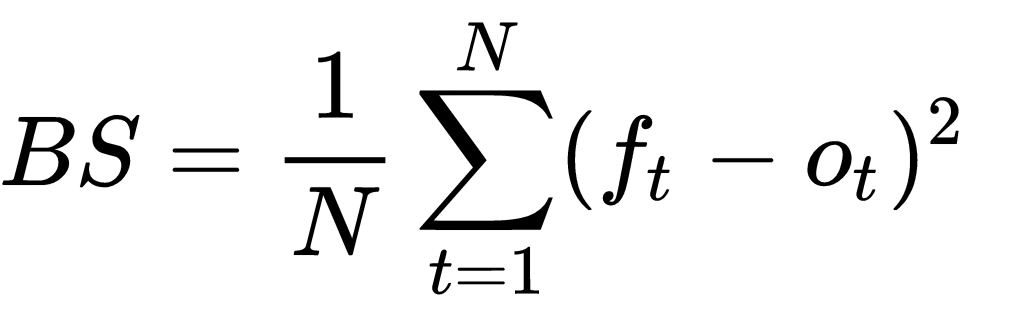
Mike, Jared, and Todd discuss prediction. What skills and practices make people “superforecasters”? How do prediction betting markets like PredictIt work? Brier scores and how to quantify the accuracy of probabilistic predictions. What are the limitations of prediction, for people and for algorithms? How might the practices of probabilistic predicting also encourage intellectual honesty and improve social discourse?
In this second part in a series on the Sermon on the Mount we go through Matthew 6. The Sermon on the Mount is especially instructive on “The Way” disciples of Jesus Christ are to follow. In Matthew 6 Jesus taught about charitable deeds and fasting with sincerity rather than hypocrisy, about simple, humble prayer, the kingdom of God, forgiveness of debts, devotion to God rather than to riches, and trust in God’s providence rather than preoccupation with worldly cares.
This is the second part of a three-part series on the Sermon on the Mount. Last time I went through Matthew chapter 5. This time we’ll get into Matthew chapter 6.
Before getting into the chapter itself I want to review a few framing ideas. One is that I’m looking at this sermon for insight into the nature of “The Way”, ἡ ὁδός (he hodos), of Christianity. This is how early Christians referred to what we would call the religion they were practicing. They called it “The Way”. And it’s to understand The Way that I come back to the New Testament for grounding, to see how Jesus taught his followers to live and how they lived. And The Way was remarkable in a couple important ways. For one it was very different from the way people lived in the wider Roman and Hellenized world in which they were embedded, different in a way that’s difficult for us to imagine today because we don’t live in that world. We don’t live in a world where people can think of just going to gladiatorial games and seeing people, people thought to be the expendable, being ripped limb from limb in a bloody spectacle for our entertainment. We would find that horrific. And that’s a testament to the way that the world has been radically transformed. But The Way of Jesus’s teachings is also remarkable because it’s still so different from the way the world is today. Even though our norms in the West have been shaped by Jesus’s teachings, whether we’re Christian or not, they still surpass what we consider practical or sensible. And I find that fascinating.
Also important to remember the significant theological insight that Jesus Christ himself is The Way: Ἐγώ εἰμι ἡ ὁδὸς (Ego eimi he hodos) (John 14:6). So this is all an investigation of Christ himself as well as of the way we are to live.
So let’s get into it.
Matthew 6:1-4
“Take heed that you do not do your charitable deeds before men, to be seen by them. Otherwise you have no reward from your Father in heaven. Therefore, when you do a charitable deed, do not sound a trumpet before you as the hypocrites do in the synagogues and in the streets, that they may have glory from men. Assuredly, I say to you, they have their reward. But when you do a charitable deed, do not let your left hand know what your right hand is doing, that your charitable deed may be in secret; and your Father who sees in secret will Himself reward you openly.”
Last time I brought up this passage as a comparison to Jesus’s teaching to “Let your light so shine before men, that they may see your good works and glorify your Father in heaven.” (Matthew 5:16) There seems to be an important difference in motivation: who is meant to be glorified? Are the good works intended to glorify God or self?
I’m reminded of the difference between an icon and an idol. An icon is an important theological concept spoken of favorably in the New Testament. For example, Paul says in his Epistle to the Romans: “For whom he did foreknow, he also did predestinate to be conformed to the image of his Son, τῆς εἰκόνος τοῦ Υἱοῦ αὐτοῦ (tes eikónos tou Huiou autou) (Romans 8:29). The elect are to be conformed to the image, or εἰκών (eikón), of the Son. We also read in Colossians that Christ is “the image [εἰκὼν (eikón)] of the invisible God” (Colossians 1:15). This concept of the icon, or image, shows up in the Old Testament as well. In Genesis: “So God created man in his own image, in the image of God created he him”. In Hebrew this “image” is צֶלֶם (tzelem), the image of God, צֶ֥לֶם אֱלֹהִ֖ים (tzelem elohim). In the ancient Greek translation, the Septuagint, this is translated as the εἰκὼν (eikón) of God, εικόνα θεού (eikóna theou). A very important theological concept. So that is a good thing. We should be icons that point toward God. People should see us bearing the image of God, seeing through us, toward God.
An idol is different. An idol is not an image that points toward God but an image that replaces God. And we can be idols in the way we go about doing ostensibly good works. If the motivation is not “Praise God” but instead, “Look at me”, it is the kind of ostentation that Jesus condemns. Jesus says this is the behavior of the ὑποκριταὶ (hupokritai), the hypocrites, play-actors, pretenders, dissemblers. Why do they do their charitable deeds? “That they may have glory from men.” And interestingly enough, Jesus says that that is what they get. “They have their reward”. But the strong implication here is that this is all they get. What they don’t get is the reward of those who do their works out of genuine concern, they don’t get their reward from the Father.
Jesus says to do our charitable deeds “in secret”, which is superior to self-glorifying display. But it’s also useful to remember and compare this to the teaching in chapter 5 that we actually should let our good works be seen by others, so that they glorify God. Something to reflect on.
Matthew 6:5-7
“And when you pray, you shall not be like the hypocrites. For they love to pray standing in the synagogues and on the corners of the streets, that they may be seen by men. Assuredly, I say to you, they have their reward. But you, when you pray, go into your room, and when you have shut your door, pray to your Father who is in the secret place; and your Father who sees in secret will reward you openly. And when you pray, do not use vain repetitions as the heathen do. For they think that they will be heard for their many words.”
What is the purpose of prayer? Prayer can certainly be a public act, though it can also be done privately. Praying in a community can bring a church community, in Greek a συναγωγή (sunagoge) or “synagogue”, closer together and at the same time closer to God. But what’s the wrong way to do it? It’s not right to want to be heard for your πολυλογία (polulogía), your “many words”. And that’s definitely a temptation. As I’m sitting here doing my own podcast and literally listening to my own voice I can appreciate the narcissistic appeal of hearing your own voice and the allure of polulogía. But that’s not what prayer is for. It’s not a time for performance. And so Jesus teaches a remedy: keep it simple. And he gave as a model what became one of the most important passages in all scripture: the Lord’s Prayer.
Matthew 6:8-14
“Therefore do not be like them. For your Father knows the things you have need of before you ask Him. In this manner, therefore, pray:
Our Father in heaven, Hallowed be Your name. Your kingdom come. Your will be done On earth as it is in heaven. Give us this day our daily bread. And forgive us our debts, And do not lead us into temptation, But deliver us from the evil one.
“For if you forgive men their trespasses, your heavenly Father will also forgive you. But if you do not forgive men their trespasses, neither will your Father forgive your trespasses.”
Some manuscripts also include at the end of the prayer: “For Yours is the kingdom and the power and the glory forever. Amen.”
It’s interesting that Jesus says that the Father already knows what we need before we ask, a fact he seems to mention as refutation of the need for polulogía, many words. So we might ask again, what is the purpose of prayer? Is it to actually inform the Father? Seems not. Is it to influence his will? Maybe, but still seems perhaps not. Is it to bring about some change in us? That seems closer to the mark to me. But that’s just an interpretation, for what it’s worth.
The Lord’s Prayer is very simple. Not ornate. It’s quite short. So it’s interesting what Jesus chooses to include in such a short prayer.
One feature is reverence for God. “Hallowed be Your name.”
A second is an expression of the desire that the Father’s Kingdom come. This is a major theme that we see in Jesus’s ministry in the Gospels. If we could give a one-sentence summary of Jesus’s message I’d go with: “The Kingdom of God is at hand” (Mark 1:15). His message was all about “the Kingdom of God”, ἡ βασιλεία τοῦ Θεοῦ (he basileia tou theou). Most of his parables were framed as parables of the Kingdom of God. In Matthew it’s expressed as the “Kingdom of Heaven”, ἡ βασιλεία τῶν οὐρανῶν (he basileia ton ouranon).
“And the disciples came and said to Him, ‘Why do You speak to them in parables?’ He answered and said to them, ‘Because it has been given to you to know the mysteries of the kingdom of heaven, but to them it has not been given.’” (Matthew 13:10-11) The parables are meant to convey the “mysteries of the kingdom of heaven.” So, “The kingdom of heaven is like a man who sowed good seed in his field” (Matthew 13:24). “The kingdom of heaven is like a mustard seed” (Matthew 13:31). “The kingdom of heaven is like leaven, which a woman took and hid in three measures of meal till it was all leavened.” (Matthew 13:33) “The kingdom of heaven is like treasure hidden in a field” (Matthew 13:44). “The kingdom of heaven is like a merchant seeking beautiful pearls” (Matthew 13:45). “The kingdom of heaven is like a dragnet that was cast into the sea and gathered some of every kind” (Matthew 13:47).
These all start the same way. Jesus tells these parables to tell what the Kingdom God, or the Kingdom of Heaven, is like. And it’s this Kingdom that we will to arrive in the Lord’s Prayer. I think that one line in the Lord’s Prayer here in Matthew 6 is thematically connected to the parables of the Kingdom of Heaven in Matthew 13. And thinking of both together will enhance an understanding of both sections. What is the nature of this Kingdom that we are willing to come? That’s a challenge, I think an exciting and interesting challenge, to understand. Jesus’s parables are quite conspicuously and intentionally difficult to understand. I know they are for me. So when I pray the Lord’s Prayer I feel like I still have some work to do to understand what I’m praying for. But I think at least I know where to look to find the answers.
“Your will be done On earth as it is in heaven.” That’s an interesting line. Is it that we affirm God’s action to bring about his will, on earth as in heaven? Or are we committing to bring about his will by obedience? Or is it both? I think it’s both. And that it’s not just in heaven, but also on earth is interesting to me. This isn’t a wholly other-worldly Gospel. It’s relevant to the world we live in. This world is supposed to be a certain way. And it’s not just disposable. Explicitly not. “For God did not send His Son into the world to condemn the world, but that the world through Him might be saved.” (John 3:17) This world is supposed to be saved. God loves the world, so we should love it too and work for his will to be done on earth as it is in heaven. What would this transformed, saved world look like? I think we know quite well what it should look like. It’s “The Way”, ἡ ὁδός (he hodos). Everything Jesus teaches in the Sermon on the Mount. That’s the way the world is supposed to be.
“Give us this day our daily bread.” We are physical beings and we have to eat. Jesus will tell us later in this chapter that we don’t need to preoccupy ourselves about that. God will and does provide for our material needs. But we should recognize that it is God who meets our needs. Without nourishment we will die. It’s God who sustains us and gives us life.
“And forgive us our debts, As we forgive our debtors.” Now there’s a provocative statement! It’s important to note here that, as Jesus said in chapter 5 that he is fulfilling the Law that was given through Moses, forgiveness of debts goes back a long way and was an important part of the Mosaic Law. Forgiving debts brings hope, new life, and freedom to people. For people without wealth, debt is a necessity. To get started in life certainly but sometimes even just to survive. And being able to pay off debts is not guaranteed. Certainly not in a Christian worldview. Recall from the previous chapter Jesus’s teaching against oaths: “ Nor shall you swear by your head, because you cannot make one hair white or black.” (Matthew 5:36) Christian humility involves understanding that much of our fate, including our prospects for income and wealth, are outside our control.
The Torah also reminds us of this. “Beware that you do not forget the Lord your God… lest—when you have eaten and are full, and have built beautiful houses and dwell in them; and when your herds and your flocks multiply, and your silver and your gold are multiplied, and all that you have is multiplied… then you say in your heart, ‘My power and the might of my hand have gained me this wealth.’ And you shall remember the Lord your God, for it is He who gives you power to get wealth” (Deuteronomy 8:11-18) We can call this the providence of God, that aspect of things occuring in our lives to our benefit or misfortune, but that lie beyond our control. I think here of the expression, “there but for the grace of God go I.” Perhaps not unrelated to that important fact is the commandment to forgive debts. Also in Deuteronomy: “At the end of every seven years you shall grant a release of debts. And this is the form of the release: Every creditor who has lent anything to his neighbor shall release it; he shall not require it of his neighbor or his brother, because it is called the Lord’s release.” (Deuteronomy 15:1-2)
Here in the Lord’s Prayer what kinds of things are being forgiven? I think it could be all sorts of things. Certainly literal debts on our part, as we forgive our own debtors. To God our debts would seem to be in the form of sin, not having paid what we owe to him under the Law. And we might also have debtors in those sorts of intangible ways. People who have not given us what they owe to us, maybe in terms of respect and love. Those are also debts that we can forgive. In Deuteronomy it speaks of there being a “release”, a שְׁמִטָּה (shmita) from the verb שָׁמַט (shamat), to let something drop. I think that’s a great way to think of it. At some point we just need to let things drop and stop trying to keep account. As Tevye says in Fiddler on the Roof, trying to keep account of offenses by an eye for an eye and a tooth for a tooth will leave the world blind and toothless. Reconciliation requires letting things drop. This is the path to reconciliation, both between us and God and between each other.
So how does that actually work? Can you actually forgive debts? Whether they be monetary debts or debts of obligation in conduct like criminal offenses? And this is where we get again into some of the surprisingly radical and seemingly impractical aspects of Jesus’s teachings and the Bible generally. The secular part of me can fully appreciate the dynamic power of finance and investment, of which debt is an essential part. Much of the modern world as we know it today wouldn’t function without loans and credit. Not to mention “usury”, i.e. loaning at interest, which the Torah prohibits. That’s something to think about. How to be a Christian and live in the modern world? And how does that relate to the coming of the Kingdom of God? How are things to change? What is God’s ideal that we will be moving toward? I don’t have conclusive answers. But I’m also reluctant to craft easy answers that compromise Christ’s teachings.
Matthew 6:16-18
“Moreover, when you fast, do not be like the hypocrites, with a sad countenance. For they disfigure their faces that they may appear to men to be fasting. Assuredly, I say to you, they have their reward. But you, when you fast, anoint your head and wash your face, so that you do not appear to men to be fasting, but to your Father who is in the secret place; and your Father who sees in secret will reward you openly.”
This is a similar message to the teaching about charitable deeds, that we do them for the glory of God and out of genuine love rather than for drawing attention to ourselves. Another point worth noting in this passage is that we ought not to make religious practice appear severe and miserable. Living the Gospel can be difficult and Jesus often acknowledges this. But we don’t have to make a grand display of that.
The age of social media has transformed the ways in which we can present ourselves to the world. There are extremes of making our lives look better than they actually are or worse than they actually are. Either one is an act. Philosophically I’m inclined to think that some form of presentation is unavoidable. We are always interpreters, even of ourselves. But we can at least try to prevent excesses in our self-presentation. John Piper, in his book Desiring God, has advocated what he has called “Christian hedonism”, the view that Christian faith should bring us joy. And he argues this point from scripture. For example, Psalms 37:4 – “Delight yourself in the LORD.” This doesn’t mean that we need to pretend to be happier than we are. But we should go about our lives normally. Jesus puts this in terms of regular grooming. Do your hair, wash your face, do the things that you normally do, even when observing periods of fasting. It’s not about trying to look miserable.
I think we can also read this teaching on fasting in light of Jesus’s teachings on the internalization of the Law. Recall Jesus moved the locus of sinfulness from murder to anger, from adultery to lust. Fasting also seems not to be about appearance but about internal edification. To the extent that it is for the benefit of others, that we are letting our let so shine, it is for the glory of God. And it’s also about an internal transformation of the heart.
Matthew 6:19-21
“Do not lay up for yourselves treasures on earth, where moth and rust destroy and where thieves break in and steal; but lay up for yourselves treasures in heaven, where neither moth nor rust destroys and where thieves do not break in and steal. For where your treasure is, there your heart will be also.”
Here is the first of Jesus’s teachings in the Sermon on the Mount regarding riches, or what he likely usually called “mammon” (ממון) in his native Aramaic. Jesus also contrasted treasures on earth with treasures in heaven when he told the rich man to sell what he had and give to the poor: “you will have treasure in heaven” (Matthew 19:21). Treasures on earth are seriously downgraded in Jesus’s teachings, even discouraged if not outright condemned. The relationship is still a little complicated, which we’ll get to in a bit, but it’s pretty clear that Jesus sees treasure in heaven as vastly superior, and that’s where the focus of his followers needs to be.
Matthew 6:22-23
“The lamp of the body is the eye. If therefore your eye is good, your whole body will be full of light. But if your eye is bad, your whole body will be full of darkness. If therefore the light that is in you is darkness, how great is that darkness!”
Because of its placement between the previous passage on heavenly treasures over earthly treasures and the next passage on serving God over mammon, this passage would seem also to pertain to the focus of devotion to God rather than to riches. This is a beautiful and richly figurative saying: Ὁ λύχνος τοῦ σώματός ἐστιν ὁ ὀφθαλμός (ho luchnos tou somatos estin ho ophthalmos) – “the lamp of the body is the eye”. The source of illumination for our whole being is that part by which we center our focus of attention.
“If therefore your eye is good, your whole body will be full of light.” That’s NKJV translation. The more traditional King James Version is: “if therefore thine eye be single,” which I think is a decent translation too. The greek there is ἁπλοῦς. It can mean “single”, “simple”, and “honest”. So there’s some rich meaning from the gospel writer there conveying both goodness and focus.
Matthew 6:24
“No one can serve two masters; for either he will hate the one and love the other, or else he will be loyal to the one and despise the other. You cannot serve God and mammon.”
As I mentioned earlier, “mammon” (ממון) is an Aramaic term for wealth. I like these Aramaic quotations in the Greek text because it gives us a little glimpse into Jesus’s own native voice. This is a succinct summation of the former two passages. Basically Jesus says you have to choose. Your master is either God or wealth. Can’t be both.
I said earlier that it’s a little complicated. But not for the reasons we might usually hear in the form of awkward accommodations, excusing our deviation (my own included) from Jesus’s literal teachings. It’s just that Jesus uses money and riches in his parables a lot. This doesn’t mean that he’s speaking favorably of literal riches. Jesus is after all the master of the nonliteral, and adamantly so. But it’s easy to forget that he may often be talking in such cases about treasures in heaven rather than treasures on earth.
One classic example is his parable of the talents in Matthew 25:14-30. And let’s recall here that a talent – τάλαντον (tálanton) – is a unit of measure, rather a special skill as we think of it in English. A man gives three servants five talents, two talents, and one talent respectively. The first two are enterprising and double the principal investment. The third man generates nothing, to his own condemnation. The first two would definitely be better examples to follow in our financial practices. That’s what I try to do in my personal finances. But Jesus’s message would seem to be something other than this literal meaning. He says it’s a parable of the kingdom of heaven. The kingdom of heaven comes, without warning, as the master in this story. And we will be made to give an account and must be prepared.
Another, stranger example is the parable of the unjust steward in Luke 16:1-13.
“He also said to His disciples: ‘There was a certain rich man who had a steward, and an accusation was brought to him that this man was wasting his goods. So he called him and said to him, ‘What is this I hear about you? Give an account of your stewardship, for you can no longer be steward.’”
“Then the steward said within himself, ‘What shall I do? For my master is taking the stewardship away from me. I cannot dig; I am ashamed to beg. I have resolved what to do, that when I am put out of the stewardship, they may receive me into their houses.’”
“So he called every one of his master’s debtors to him, and said to the first, ‘How much do you owe my master?’ And he said, ‘A hundred measures of oil.’ So he said to him, ‘Take your bill, and sit down quickly and write fifty.’ Then he said to another, ‘And how much do you owe?’ So he said, ‘A hundred measures of wheat.’ And he said to him, ‘Take your bill, and write eighty.’ So the master commended the unjust steward because he had dealt shrewdly. For the sons of this world are more shrewd in their generation than the sons of light.”
“And I say to you, make friends for yourselves by unrighteous mammon, that when you fail, they may receive you into an everlasting home. He who is faithful in what is least is faithful also in much; and he who is unjust in what is least is unjust also in much. Therefore if you have not been faithful in the unrighteous mammon, who will commit to your trust the true riches? And if you have not been faithful in what is another man’s, who will give you what is your own?
“No servant can serve two masters; for either he will hate the one and love the other, or else he will be loyal to the one and despise the other. You cannot serve God and mammon.”
What a strange passage! I love it. What does it mean? Again it would seem not to be meant literally. The parable concludes with the same teaching we see in Matthew 6: “You cannot serve God and mammon.” Yet just a few verses before that it speaks of making “friends for yourselves by unrighteous mammon”. It’s certainly strange.
I bring this up because I want to be fully transparent in the way we look at Jesus’s teachings. I think we often proof text to highlight the teachings that conform to our views and conveniently ignore some of the other difficult or strange things Jesus taught when they don’t fit the agenda. The best practice is to actively resist and counter that tendency.
Regarding the parable of the unjust steward, I’ve read a lot of commentaries on these verses and I’m not satisfied that any one of them explains them adequately or at least that any one of them is able to demonstrate any interpretation conclusively. The safest interpretation I’ve seen is that, as the dishonest manager was prudent in using the things of this life to ensure the future, so believers should be prudent in preparing for the coming of the kingdom of heaven. It’s a comparison.
Interesting to note here another example in scripture where shrewdness or craftiness is presented more positively than we would expect. I think here also of Jacob in Genesis, in his shrewd plans to get his father’s birthright and blessing from under Esau and to get the better part of his father-in-law Laban’s flock. The shrewdness of the unjust servant is, in greek, φρόνιμος (phronimos). Jesus uses the same word in Matthew 10:16 when counseling his disciples to be as wise (φρόνιμοι, phrónimoi) as serpents but also innocent as doves. The same word is also used in the parable of the five wise virgins. This kind of resourcefulness, prudence, and shrewdness is, intriguingly, encouraged. But the object or aim to which either wisdom or foolishness apply is important. Using another word for wisdom, σοφία (sophia), Paul told the Corinthians that “the wisdom of this world is foolishness with God” (1 Corinthians 3:19). Symmetrically “the natural man receiveth not the things of the Spirit of God: for they are foolishness unto him” (1 Corinthians 2:14). We ought to be prudent, resourceful, and even shrewd for the things of God and of the kingdom of heaven.
Matthew 6:25-34
“Therefore I say to you, do not worry about your life, what you will eat or what you will drink; nor about your body, what you will put on. Is not life more than food and the body more than clothing? Look at the birds of the air, for they neither sow nor reap nor gather into barns; yet your heavenly Father feeds them. Are you not of more value than they? Which of you by worrying can add one cubit to his stature?”
“So why do you worry about clothing? Consider the lilies of the field, how they grow: they neither toil nor spin; and yet I say to you that even Solomon in all his glory was not arrayed like one of these. Now if God so clothes the grass of the field, which today is, and tomorrow is thrown into the oven, will He not much more clothe you, O you of little faith?”
“Therefore do not worry, saying, ‘What shall we eat?’ or ‘What shall we drink?’ or ‘What shall we wear?’ For after all these things the Gentiles seek. For your heavenly Father knows that you need all these things. But seek first the kingdom of God and His righteousness, and all these things shall be added to you. Therefore do not worry about tomorrow, for tomorrow will worry about its own things. Sufficient for the day is its own trouble.”
This brings us back to the doctrine of divine providence, that events in our lives can occur to our benefit or misfortune, that lie beyond our control. Appreciating this is important for our well-being and happiness. But I think it’s also just an important part of understanding the nature of reality. And that makes sense. A proper understanding of reality would be conducive to well-being and happiness, at least in the long-run. What is the illusion that this understanding might dispel? The illusion of reality as something that we can direct and control. It’s not a total illusion. We can direct some things to an extent. But there’s always a limit. And remarkably, also fortunately, much in reality that we rely upon just happens outside of and beyond our control or even awareness.
One of Jesus’s parables is especially illustrative of this point.
“The kingdom of God is as if a man should scatter seed on the ground, and should sleep by night and rise by day, and the seed should sprout and grow, he himself does not know how. For the earth yields crops by itself: first the blade, then the head, after that the full grain in the head. But when the grain ripens, immediately he puts in the sickle, because the harvest has come.” (Mark 4:26-29)
We know more through modern botany about these processes but there is still a lot we don’t know and, significantly, the more we come to understand about the physiological and biochemical complexity involved in seed germination and plant growth the more astounding it is how all this just happens with minimal input from us. It’s miraculous. And that’s what the whole world is like.
It’s easy to forget this because we are always engaged in activity and it feels like we’re the ones keeping our lives going. And yes, there are things that we have to do. But the vast majority of what sustains us is given to us. Hugh Nibley had this line: “Work we must but the lunch is free”. Playing there off the expression in economics that “there ain’t no such thing as a free lunch” – TANSTAAFL. Work may be necessary but we shouldn’t conclude from this that our work is sufficient for all that we have. The greater part of what sustains us and makes our existence possible precedes us and is beyond our control and awareness. I think this realization is one of the first steps toward sincere piety.
Another side to this is that we preoccupy ourselves much more than we really need to. At least for the things that are needful. Jesus said, “One thing is needful”, χρεία (chreia) or necessary (Luke 10:42). But we preoccupy ourselves – μεριμνάω (merimnáo) – unnecessarily. But Jesus commands: “Do not worry” – μὴ μεριμνᾶτε (me merimnáte). And the list of things for which Jesus says not to worry gets down to what we might consider the most basic things.
“Do not worry about your life, what you will eat or what you will drink; nor about your body, what you will put on.” Food, drink, clothing. Those are pretty basic things. Stuff we would say today goes right at the foundation of Maslow’s Hierarchy of needs. Is it possible to live like that? I honestly don’t know. I guess I’m in the class of people Jesus calls the ὀλιγόπιστοι (oligópistoi) – those of little faith. I’m not ready to take that kind of leap yet. But I think we can say this: if Jesus says we shouldn’t preoccupy ourselves with even those most basic things it’s reasonable to suppose that we shouldn’t preoccupy ourselves with the many far less basic things with which we do regularly preoccupy ourselves. Jesus teaches a much simpler way of life than the vast majority of people practice. Even as oligópistoi Christians, if we’re not able to go all the way to the kind of life Jesus teaches us to live we can at least move in that direction and simplify our lives.
The last verse of this chapter is one I’ve found personally meaningful. “Do not worry about tomorrow, for tomorrow will worry about its own things. Sufficient for the day is its own trouble.” I’ve found it easy to fall into unhealthy imaginative fictions about troubles the future might bring. Getting fixated on and upset about things that aren’t even real. That is not a good way to live. I get a kick out of Jesus’s half-sardonic, half-optimistic saying: “Sufficient for the day is its own trouble.” We’ve got enough to worry about in the present moment. Don’t multiply worries beyond necessity or reality. But it’s not only trouble that we experience in the present. There is grace, free gifts, to be seen all around us right now. We can see this in the birds of the sky, the lilies of the field, and in countless other free bounties given to us by God. We do not need to worry and should not worry because God is mindful of us and watching over us.
Isaiah has a reputation for being very difficult to understand. I’d like to suggest that Isaiah isn’t actually intrinsically difficult to understand, as long as we read him in historical and prophetic context. Putting Isaiah in context includes understanding the events that he was responding to and prophesying about. These include the imperial activities of Assyria, the superpower of the region. As prophet to Judah’s kings, Isaiah remarked on the intrigues and ventures of Assyria and neighboring kingdoms. At the same time Isaiah was prophesying against his own people in Judah for their sins, especially their pride and oppression of the poor. These two prongs of prophecy, of the threat of surrounding nations and of the sins of Judah, converged as Isaiah warned that the LORD would bring the might of enemy nations to bear on the LORD’s people, to be smitten and scattered, while he also promised eventual gathering and reconciliation.
There’s a joke among Latter-day Saints that there was once a man who always carried around a pocket-sized Book of Mormon in his jacket. One day he was mugged in the street and shot in the chest. Fortunately, the bullet hit the Book of Mormon, which saved his life. As he examined the book later he found that the bullet had made it through First Nephi and the first few chapters of Second Nephi. But stopped there. Amused, he thought to himself, “Even a bullet can’t make it through the Isaiah chapters!”
For those not familiar with the Book of Mormon, there are several chapters from Isaiah quoted in full within its first hundred pages. Readers cruising along with the narrative sections preceding often find the Isaiah chapters intimidating and impenetrable. It’s a common enough experience among my co-religionists that this joke hits home. And it also makes for a useful introduction to my subject, putting Isaiah in context.
Isaiah has a reputation for being very difficult to understand. What I’d like to suggest is that Isaiah isn’t actually intrinsically difficult to understand but it often is difficult to understand in the way it’s read. The way it’s often read is without the historical context that gives that background for what is going on in the book, what Isaiah is responding to and talking about. The Book of Mormon even points this out. Nephi says Isaiah isn’t difficult for him to understand because he knew “concerning the regions round about” Jerusalem (2 Nephi 25:6). That’s actually a very helpful place to start. What are the regions round about? The main regions to know about are:
Assyria Babylon Persia Judah Israel Aram Egypt
And it also helps to know something of the rulers involved in the geopolitics of Isaiah’s time. This will make many of the apparently difficult passages in Isaiah much more comprehensible.
Over the course of hundreds of years, from the time of Isaiah to the days of Ezra and Nehemiah, the superpowers that dominated Mesopotamia were, in succeeding order: Assyria, Babylon, and Persia. The Neo-Assyrian Empire was in existence from 911 – 609 BC. It was then conquered by the Neo-Babylonian Empire which lasted from 626 – 539 BC. It was then conquered by the Persian Achaemenid Empire, which lasted from 550 – 330 BC, with the conquest of Alexander the Great. In this succession of empires the kingdoms of Israel and Judah were relatively minor powers that were tossed around, besieged, conquered, and deported. Although Israel and Judah were minor powers in comparison to the other kingdoms, the Bible has a much more prominent place in our culture today than the records of any of these empires. And so we see much of this history through the eyes of Israel and Judah. Isaiah is one of these observers who was also very prolific and expressive.
The Geopolitical Landscape
Judah and Israel
Judah and Israel are the two Hebrew-speaking nations that (usually) worship the LORD God, YHWH. I say “usually” because both, Israel especially, tend to worship other gods, either instead of or along with the LORD God. And that’s why the LORD’s bulldog prophets Elijah and Elisha were out there railing against idol worship. These kingdoms had been united under Saul, David, and Solomon. But they split after Solomon’s death. Judah is the southern kingdom, with its capital in Jerusalem. Israel is the northern kingdom with its capital in Samaria.
Isaiah lived in Judah, the southern kingdom, from the 8th to 7th century BC. He was active during the reigns of four kings of Judah:
Uzziah Jotham Ahaz Hezekiah
The kings to the north in Israel during Isaiah’s lifetime were:
Pekah, the son of Remaliah (737–732 BC) Hoshea (732–722 BC)
In the early books of Isaiah Pekah is often referred to as “the son of Remaliah”. And he was involved in some alliances with other Kingdoms against the Kingdom of Judah.
Assyria.
By far the dominant power in the region during this time was the Assyrian Empire, sometimes called the Neo-Assyrian Empire by historians to distinguish it from an earlier empire. The Assyrian Empire lasted from 911 to 609 BC. Isaiah’s lifetime coincides with some of its most historically significant rulers. These include:
Tiglath-Pileser III (745–727 BC) Shalmaneser V (727–722 BC) Sargon II (722–705 BC) Sennacherib (705-681 BC)
Shalmaneser V was very important in the history of the northern kingdom of Israel because he conquered it and scattered its people. For Isaiah and Judah the two major Assyrian rulers will be Tiglath-Pilesar and Sennacherib.
Aram and Egypt
Two other important kingdoms worth remembering are Aram and Egypt. Egypt should be quite familiar to everyone. It was no longer as dominant a power at this time but it was still significant. Aram, also known as Aram-Damascus, is sometimes called just “Syria”, as it is in the King James Version. This can be a little confusing since the KJV translation talks about Syria and Assyria. So it’s important to keep track of these and remember that they are separate kingdoms. In the Hebrew text of Isaiah it is אֲרָם (aram). And it’s where the name for the Aramaic language comes from. To avoid confusion with Assyria I like to call it Aram or Aram-Damascus. Aram, or Syria, was centered around the city of Damascus. The most important Aramean ruler mentioned in Isaiah is:
Rezin (754 BC–732 BC)
Rezin was also, as we shall see, the last king of Aram.
Egypt is also important in the geopolitical scene because they entered an alliance with Aram-Damascus and Israel and later with Judah.
The Geopolitical History
The first important geopolitical event to know about in Isaiah is the alliance between Aram and Israel against Judah. At this time Judah was ruled by Ahaz, Israel was ruled by Pekah, son of Remaliah, and Aram (or Syria) was ruled by Rezin. Aram and Israel formed an alliance to take over Judah and install a new ruler to replace Ahaz. The reason they wanted to do this was to compel Judah to join them in opposing the Assyrian Empire, which at this time was ruled by Tiglath-Pilesar. This failed however. Ahaz actually entered an alliance with Tiglath-Pilesar of Assyria. And it didn’t work out too well for Aram and Israel. Tiglath-Pileser marched on Damascus, annexed it into his empire, and killed Rezin. He also took portions of Israel and deported portions of its population. Pekah was assassinated shortly after, his rule usurped by Hoshea.
These events are described in Isaiah chapter 7. This is the same chapter that talks about Immanuel and a young girl or “virgin” conceiving (more on that shortly). I’ll read Isaiah 7:1-16 and insert some comments on the history mentioned above. If you’ve struggled painfully through this passage before hopefully it will be a little easier with the above in mind. I think most listeners will be most familiar with the King James Version so I’ll use that translation.
Isaiah 7:1-16
“And it came to pass in the days of Ahaz the son of Jotham, the son of Uzziah, king of Judah, that Rezin the king of Syria, and Pekah the son of Remaliah, king of Israel, went up toward Jerusalem to war against it, but could not prevail against it. And it was told the house of David, saying, Syria is confederate with Ephraim.”
So that’s just a description of the situation we’ve described. Note here that “Ephraim” is another way of referring to the Kingdom of Israel. Ephraim being one of twelve tribes of Israel that was dominant in the north.
“And his [Ahaz’s] heart was moved, and the heart of his people, as the trees of the wood are moved with the wind. Then said the Lord unto Isaiah, Go forth now to meet Ahaz, thou, and Shearjashub thy son, at the end of the conduit of the upper pool in the highway of the fuller’s field; And say unto him, Take heed, and be quiet; fear not, neither be fainthearted for the two tails of these smoking firebrands, for the fierce anger of Rezin with Syria, and of the son of Remaliah. Because Syria, Ephraim, and the son of Remaliah, have taken evil counsel against thee, saying, Let us go up against Judah, and vex it, and let us make a breach therein for us, and set a king in the midst of it, even the son of Tabeal: Thus saith the Lord God, It shall not stand, neither shall it come to pass.”
So here Isaiah is going to the king of Judah, Ahaz, to tell him not to fear this alliance against him, that it’s not going to prevail. We read here that Pekah and Rezin were planning to install their own puppet, “the son of Tabeal”, as king in Ahaz’s place.
“For the head of Syria is Damascus, and the head of Damascus is Rezin; and within threescore and five years shall Ephraim be broken, that it be not a people. And the head of Ephraim is Samaria, and the head of Samaria is Remaliah’s son.”
So these names should all be familiar now. The capital of Aram (or Syria) is Damascus and it’s headed by Rezin. The capital of Israel is Samaria and it’s headed by Pekah, Remaliah’s son. And Isaiah is prophesying that they’re not going to last.
“If ye will not believe, surely ye shall not be established. Moreover the Lord spake again unto Ahaz, saying, Ask thee a sign of the Lord thy God; ask it either in the depth, or in the height above.”
The LORD tells Ahaz, through Isaiah, to ask for a sign to convince him of all this.
“But Ahaz said, I will not ask, neither will I tempt the Lord.”
Ahaz doesn’t want to ask for a sign, presumably out of piety. But Isaiah and the LORD aren’t buying it.
“And he said, Hear ye now, O house of David; Is it a small thing for you to weary men, but will ye weary my God also? Therefore the Lord himself shall give you a sign.”
So Ahaz is going to get a sign whether he likes it or not. And what is the sign?
“Behold, a virgin shall conceive, and bear a son, and shall call his name Immanuel. Butter and honey shall he eat, that he may know to refuse the evil, and choose the good. For before the child shall know to refuse the evil, and choose the good, the land that thou abhorrest shall be forsaken of both her kings.”
So the sign is that a child is going to be conceived and born and before the child is grown Rezin and Pekah will be gone. In other words, this is going to happen soon. So it’s meant to be reassuring for Ahaz.
Who is this child in the prophecy? Well, if you’ve heard this verse quoted around Christmas you know it’s certainly used theologically by Christians to refer to Jesus. I will make the case in a minute that this is actually a valid theological reading. But, it seems not to be the primary meaning in the original context. The primary meaning of the prophecy is referring to a child who would be born very soon, who would still be a child by the time Rezin and Pekah fell from power. So that couldn’t be Jesus. We don’t know for sure who the child referred to is. It could just be a random, nameless child. But this is often thought to be referring to Ahaz’s son Hezekiah, the next king of Judah.
So what of Christ? And doesn’t the prophecy refer to conception and birth by a virgin? What other virgin has conceived and given birth than Mary the mother of Jesus? First it’s important to note that “virgin” is probably not the best English translation of the Hebrew word used here. In Hebrew the one conceiving is an עַלְמָ֗ה (almah), a “young woman”, not necessarily a virgin; which would be בְּתוּלָה (betulah). An almah could be a virgin and maybe this woman even was at the time of the prophecy. But that also doesn’t necessarily mean she was a virgin when she gave birth or that she conceived as a virgin. That probably wouldn’t occur to a reader prior to the virgin birth of Christ. The primary reading it would seem here is that the miraculous sign is not a virgin birth but the rapidity of the downfall of Rezin and Pekah, that it will occur before the child matures.
Why is this so often translated as “virgin” rather than simply “young woman”. One reason is that in early Christianity the most common version of Isaiah that Christians would have been familiar with was the Greek translation, the Septuagint. And in the Septuagint almah is translated as παρθένος (parthénos), which to the readers in the time of early Christianity was understood to mean, more particularly, a virgin.
But can this prophecy also refer to Christ? I think it certainly can and the New Testament uses it in that way, in Matthew 1:21-23.
“And she shall bring forth a son, and thou shalt call his name Jesus: for he shall save his people from their sins. Now all this was done, that it might be fulfilled which was spoken of the Lord by the prophet, saying, Behold, a virgin shall be with child, and shall bring forth a son, and they shall call his name Emmanuel, which being interpreted is, God with us.”
In our postmodern age we aren’t unacquainted with the idea that texts can have multiple meanings that can extend far beyond the intent of the author. And maybe Isaiah even had a double meaning in mind. Either way we as Christians can certainly read Isaiah with a cristological lens. I’m actually quite partial to finding cristological types all over the place, even in the natural world and in daily life. In Latter-day Saint scripture, in the Book of Moses, there’s a wonderful passage in Moses 6:63 that says:
“And behold, all things have their likeness, and all things are created and made to bear record of me, both things which are temporal, and things which are spiritual; things which are in the heavens above, and things which are on the earth, and things which are in the earth, and things which are under the earth, both above and beneath: all things bear record of me.”
I think that is fantastic theology. And I think finding a typology of Christ in this prophecy in Isaiah is completely legitimate theologically. So I’m something of a non-partisan, liberal-conservative hybrid in my interpretation of this scripture.
One other point of interest in this scripture is that the title given to the child, “Immanuel” means “God is with us”. That’s:
im, “with” + anu, “us”, a first person plural pronominal suffix + el, “God” or “a god”.
Kings were thought to be representatives of the LORD God so this could be applicable to Hezekiah. But applying it to Christ, as the incarnation of God in human form among other human beings on earth, certainly makes sense for Christian theology.
Another scripture that becomes much clearer with the geopolitical history in mind is Isaiah 8:5-10.
“The Lord spake also unto me again, saying, Forasmuch as this people refuseth the waters of Shiloah that go softly, and rejoice in Rezin and Remaliah’s son; Now therefore, behold, the Lord bringeth up upon them the waters of the river, strong and many, even the king of Assyria, and all his glory: and he shall come up over all his channels, and go over all his banks: And he shall pass through Judah; he shall overflow and go over, he shall reach even to the neck; and the stretching out of his wings shall fill the breadth of thy land, O Immanuel. Associate yourselves, O ye people, and ye shall be broken in pieces; and give ear, all ye of far countries: gird yourselves, and ye shall be broken in pieces; gird yourselves, and ye shall be broken in pieces. Take counsel together, and it shall come to nought; speak the word, and it shall not stand: for God is with us.”
Worth noting here that that last line, “for God is with us” in Hebrew is: כִּ֥י עִמָּ֖נוּ אֵֽל, ki immanu el. And that’s the message that Isaiah wants to drive home here. God is with us so we don’t need to associate ourselves with Aram and Israel. We ought to take in the waters of Shiloah rather than rejoice in Rezin and Remaliah’s son, the kings of Aram and Israel respectively. Here the humble and unassuming House of David is metaphorically compared to the gently flowing waters of the Shiloah, a relatively small stream that supplies water to Jerusalem. But the LORD is going to bring in Assyria, like the waters of the Euphrates. Assyria will wipe out Aram and subdue Israel. It will also come up against Judah and “reach even to the neck”. More on that later. But none of these powers will prevail. “Associate yourselves, O ye people, and ye shall be broken in pieces.”
What is this about Assyria passing through Judah, overflowing and going over, reaching even to the neck, and stretching out his wings to fill the breadth of the land? This is a prophecy of the siege on Jerusalem by Assyria in 701 BC. This is a fascinating episode in biblical history because it’s also recorded in extra-biblical sources. Both the Bible and Assyrian sources record the events of this siege. By this time the king of Assyria was Sennacharib. Hezekiah entered an alliance with the kingdoms of Sidon, Ascalon, Ekron, and Egypt against Assyria. Sennacherib attacked the rebels, conquering Ascalon, Sidon and Ekron and defeating the Egyptians and driving them from the region. He marched toward Jerusalem, destroying 46 towns and villages in his path. Assyria finally besieged Jerusalem. Both the Bible and Assyrian records concur that Jerusalem was not conquered. They differ on the reason. According to Sennacharib’s account Judah paid him tribute so he left. But according to the Bible an angel of the Lord killed 185,000 Assyrian soldiers at Jerusalem after Hezekiah prayed in the temple (2 Kings 18-19). In the end Isaiah’s prophecy was fulfilled: “It shall not stand: for God is with us.”
The LORD’s Chastisement of Judah
Although Judah is ultimately spared from Assyria it is clear that the LORD is in many ways displeased with what he is seeing in Judah. And though Judah, unlike Israel, is not conquered by Assyria, it is eventually conquered by Babylon. Since Judah is under the covenantal protection of the LORD God this defeat is justified by Judah’s disobedience to the terms of the covenant. Because of this much of Isaiah lists Judah’s offenses and expresses the LORD’s displeasure.
We should note here that modern biblical scholarship theorizes that while the first half of the book, chapters 1-39, is the work of the historical Isaiah, the remainder is thought to be the work of one or more authors writing as Isaiah, but after the conquest by Babylon a couple centuries later. This is often called “Second Isaiah”. These later books are much more consoling and forgiving in their tone, more to the effect of forgiving an already chastened and conquered people than of condemning a sinful and as-yet-unpunished people. In both cases Judah’s offenses are a recurring topic. Let’s look at some examples.
Isaiah 1:2-4
“Hear, O heavens, and give ear, O earth: for the Lord hath spoken, I have nourished and brought up children, and they have rebelled against me. The ox knoweth his owner, and the ass his master’s crib: but Israel doth not know, my people doth not consider. Ah sinful nation, a people laden with iniquity, a seed of evildoers, children that are corrupters: they have forsaken the Lord, they have provoked the Holy One of Israel unto anger, they are gone away backward.”
So it’s quite clear here that the LORD is not pleased with what he’s seeing. And there’ll be a lot more where that comes from. There’s plenty of divine displeasure to spare in Isaiah. Later in the book Isaiah will repeat the warning, “his hand is stretched out still”, וְעֹ֖וד יָדֹ֥ו נְטוּיָֽה ve-od yad-o netuyah (Isaiah 5:25; 9:12, 17, 21; 10:4). Sometimes people interpret the English translation as a message of comfort, the LORD extending his hand in forgiveness. A nice thought, but no. The intended message is that the LORD’s hand is still stretched out to smite. “For all this his anger is not turned away, but his hand is stretched out still.” Nevertheless, Isaiah also has plenty of messages of comfort. For example, another verse from this first chapter:
Isaiah 1:16-19
“Wash you, make you clean; put away the evil of your doings from before mine eyes; cease to do evil; Learn to do well; seek judgment, relieve the oppressed, judge the fatherless, plead for the widow. Come now, and let us reason together, saith the Lord: though your sins be as scarlet, they shall be as white as snow; though they be red like crimson, they shall be as wool. If ye be willing and obedient, ye shall eat the good of the land.”
So we see the forgiving side of the LORD as well.
Let’s look at a few more examples of the condemnation, not to dwell on that but because they might be a little confusing and it’s helpful to review them so that they make more sense the next time you read them.
Isaiah 5:26-28
“And he will lift up an ensign to the nations from far, and will hiss unto them from the end of the earth: and, behold, they shall come with speed swiftly: None shall be weary nor stumble among them; none shall slumber nor sleep; neither shall the girdle of their loins be loosed, nor the latchet of their shoes be broken: Whose arrows are sharp, and all their bows bent, their horses’ hoofs shall be counted like flint, and their wheels like a whirlwind.”
There are a few places where, in the KJV, Isaiah refers to and “ensign”, נֵ֤ס (nes), which is a flag or banner. Sometimes it’s a good thing. And sometimes it’s definitely not. This is one of those verses where it’s not. Here Isaiah is saying that the LORD is putting up an ensign or banner for nations like Assyria and Babylon to come in and invade. And they’re going to attack hard. “None shall be weary nor stumble among them; none shall slumber nor sleep; neither shall the girdle of their loins be loosed, nor the latchet of their shoes be broken.” This isn’t going to be a casual march. They’re coming in ready to fight. And it’s a well-outfitted, well-trained military machine. “Whose arrows are sharp, and all their bows bent, their horses’ hoofs shall be counted like flint, and their wheels like a whirlwind.” I’ve heard this passage sometimes interpreted as Isaiah’s vision of a steam locomotive, like he was trying his best to describe a nineteenth century technology in his 8th century BC terms. That’s a creative take, but unnecessary. In context, a literal interpretation makes plenty of sense here already. The Assyrians’s arrows are sharp, their bows are bent and ready to fire, their horses hoofs are kicking up sparks like flint, and their chariot wheels are spinning like a whirlwind. They’re coming in fast. So watch out! I’ll share a positive example of the “ensign” in a bit. But a few more verses of condemnation.
Isaiah 3:16-24
“Moreover the Lord saith, Because the daughters of Zion are haughty, and walk with stretched forth necks and wanton eyes, walking and mincing as they go, and making a tinkling with their feet: Therefore the Lord will smite with a scab the crown of the head of the daughters of Zion, and the Lord will discover their secret parts. In that day the Lord will take away the bravery of their tinkling ornaments about their feet, and their cauls, and their round tires like the moon, The chains, and the bracelets, and the mufflers, The bonnets, and the ornaments of the legs, and the headbands, and the tablets, and the earrings, The rings, and nose jewels, The changeable suits of apparel, and the mantles, and the wimples, and the crisping pins, The glasses, and the fine linen, and the hoods, and the vails. And it shall come to pass, that instead of sweet smell there shall be stink; and instead of a girdle a rent; and instead of well set hair baldness; and instead of a stomacher a girding of sackcloth; and burning instead of beauty.”
There are a lot of strange and unfamiliar words used here, especially in the KJV. I’m not sure when I last used “wimples” or “crisping pins”. So what’s happening here? The gist is that the LORD is condemning the people, particularly the women among the people here, for their pride, materialism, and ostentatious display of wealth. All those funny words for their jewelry listed off here; these people are basically blinged out to the max. That’s the takeaway here. And the LORD is going to put a stop to that in a big way. All this fine apparel is going to be taken away and they’ll be stripped naked. They’re hair that was all done up is going to fall out to the point of baldness and instead of being perfumed they’re going to reek. So a dramatic shift from pride to utter shame.
Isaiah 5:8-12
“Woe unto them that join house to house, that lay field to field, till there be no place, that they may be placed alone in the midst of the earth! In mine ears said the Lord of hosts, Of a truth many houses shall be desolate, even great and fair, without inhabitant. Yea, ten acres of vineyard shall yield one bath, and the seed of an homer shall yield an ephah. Woe unto them that rise up early in the morning, that they may follow strong drink; that continue until night, till wine inflame them. And the harp, and the viol, the tabret, and pipe, and wine, are in their feasts: but they regard not the work of the Lord, neither consider the operation of his hands.”
This is another verse of condemnation that might be a little confusing, with its terms like “homer” and “ephah”. The important thing to know here is that these are units of measure and the gist is that in spite of all their landed wealth they’re not going to get much harvest out of it. Similar to the condemnation of haughtiness in the previously quoted passage, the LORD here is condemning the materialism of the wealthy. By joining house to house and field to field “till there be no place” the wealthy are taking up all the land and dispossessing the poor. Under normal circumstances having all the land would mean that you’ll have abundant harvest and food. But the LORD says no such thing will happen. In spite of all their land, the wealthy will get hardly any harvest from it.
Enough of the condemnation. Now for something positive. Although Isaiah prophesies that the LORD will smite and scatter his people by the might of other nations, like Assyria, he also prophesies that the LORD will gather them again.
Isaiah 11:11-13
“And it shall come to pass in that day, that the Lord shall set his hand again the second time to recover the remnant of his people, which shall be left, from Assyria, and from Egypt, and from Pathros, and from Cush, and from Elam, and from Shinar, and from Hamath, and from the islands of the sea. And he shall set up an ensign for the nations, and shall assemble the outcasts of Israel, and gather together the dispersed of Judah from the four corners of the earth. The envy also of Ephraim shall depart, and the adversaries of Judah shall be cut off: Ephraim shall not envy Judah, and Judah shall not vex Ephraim.”
Here the ensign for the nations is set up not to bring in enemy nations to invade the LORD’s people, but rather to gather the LORD’s people from among the nations to which they were scattered: from Assyria, and from Egypt, and from the islands of the sea. That, and the LORD’s people will no longer be divided, between Judah and Ephraim. Instead they will be reconciled.
This message of forgiveness, of gathering the scattered people, is amplified in the later passages that are sometimes called “Second Isaiah”.
Isaiah 54:7-10
“For a small moment have I forsaken thee; but with great mercies will I gather thee. In a little wrath I hid my face from thee for a moment; but with everlasting kindness will I have mercy on thee, saith the Lord thy Redeemer. For this is as the waters of Noah unto me: for as I have sworn that the waters of Noah should no more go over the earth; so have I sworn that I would not be wroth with thee, nor rebuke thee. For the mountains shall depart, and the hills be removed; but my kindness shall not depart from thee, neither shall the covenant of my peace be removed, saith the Lord that hath mercy on thee.”
These exultant phrases from the later chapters of Isaiah are especially resonant and, in my opinion, some of the greatest in all scripture.
Review
Like Nephi in the Book of Mormon, we can understand Isaiah better with some acquaintance with the “regions round about”, understanding the events occurring during Isaiah’s lifetime that he was responding to and prophesying about. Most significantly these include the imperial ambitions of Assyria, the superpower of the region. As a counselor to Judah’s kings — including Uzziah, Jotham, Ahaz, and Hezekiah — Isaiah remarked on the intrigues and ventures of neighboring kingdoms as they jockeyed and attempted to shift the balance of power from the massive Assyrian bulk to their northeast. At this same time Isaiah was prophesying against his own people in Judah for their sins, especially their pride and oppression of the poor. These two prongs of prophecy, of the threat of Assyria and of the sins of Judah, converged as Isaiah warned that the LORD would bring the might of Assyria, and later of Babylon, to bear on the LORD’s people, to be smitten and scattered. But the Book of Isaiah also contains promises of reconciliation and restoration. As the title page of the Book of Mormon puts it, “to show unto the remnant of the house of Israel.. that they are not cast off forever.” Isaiah prophesied that the LORD and his people could come and reason together and that after their chastisement his kindness would return and not depart. These are the broad themes of the remarkable Book of Isaiah.
Pete and Todd discuss truth, with an outline of Three Truths About Truth: (1) We aren’t as good at perceiving and remembering facts as we think we are. (2) A lot of our systems are based on a much more limited or squishier version of truth than we often assume. (3) The things we assume and think of as true are often not accepted as true by our neighbors or fellow citizens.